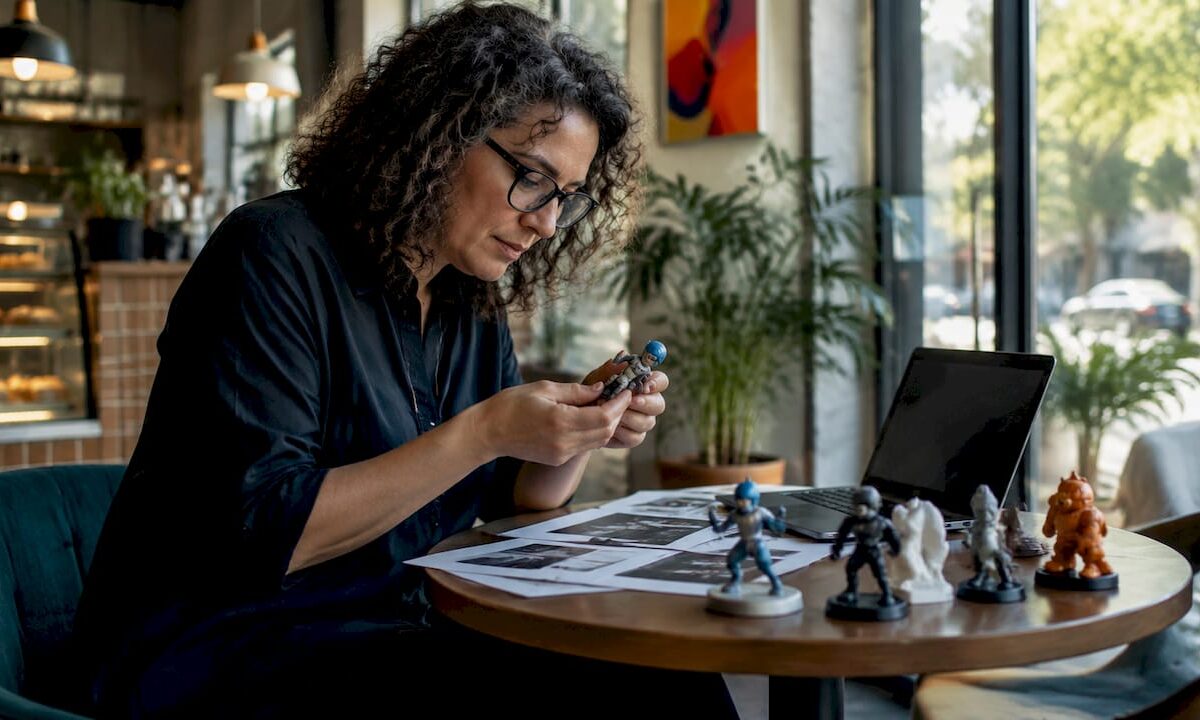
Designer inspecting personalized 3D printed miniature

Types of Personalized 3D Printed Gifts for Every Occasion


TL;DR:

  • Personalized 3D printed gifts are custom objects created layer by layer with personal designs, making each piece a unique original. These gifts include figurines, lithophane photo lamps, and functional items like keychains, all offering intricate personalization impossible with mass production. Proper reference material, material choice, and digital previews are essential for creating meaningful, durable, and precisely crafted personalized gifts.

Personalized 3D printed gifts are custom objects manufactured layer by layer with names, photos, or personal designs built directly into the physical form. Unlike a monogrammed mug or an engraved keychain, these gifts are shaped from scratch around the recipient, making every piece a true original. The types of personalized 3D printed gifts available today span figurines, lithophane photo lamps, functional keychains, sculptural home decor, and more. The batch-of-one capability of 3D printing means intricate personalization that mass manufacturing simply cannot replicate. This guide breaks down each major category so you can choose the right gift with confidence.

1. Types of personalized 3D printed gifts: figurines and miniatures

Close-up of detailed personalized 3D printed figurine

Custom figurines are the most emotionally resonant category in personalized 3D printing. A skilled maker converts a photo or sketch into a photorealistic or stylized miniature of a person, pet, or character, then prints it in SLA resin for fine surface detail. The result is a physical portrait that no photo frame can match.

Popular occasions for custom figurines include:

  • Wedding cake toppers modeled from engagement photos
  • Pet portraits capturing a dog’s exact fur pattern or a cat’s posture
  • Tabletop game pieces shaped like the player’s own character
  • Desk tokens for birthdays, retirements, or graduations

Pricing for detailed miniatures runs at a wide range of price points depending on size and detail depending on complexity and size. That range reflects the difference between a simple single-figure bust and a full-color multi-figure scene. High-resolution resin (SLA) printing can capture facial features and fur texture at a scale standard filament printing cannot match. CC 3D Labs produces on FDM printers with multi-color AMS, which handles most figurine and keepsake work beautifully — and if a design truly needs resin-level detail, we’ll say so up front rather than overpromise.

Pro Tip: Send at least two reference photos from different angles. A front-facing photo alone leaves the maker guessing at depth, which affects how accurately the figurine captures the subject’s proportions.

2. Personalized photo gifts: lithophanes and 3D photo lamps

A lithophane is a three-dimensional relief panel that reveals a photographic image only when backlit. The thinner areas of the print let more light through, and the thicker areas block it, creating tonal contrast that forms a recognizable image. The effect is striking in a way that a printed photograph is not, because the image appears to glow from within.

The best photos for lithophanes share three qualities:

  • High contrast between subject and background
  • Simple composition without cluttered midgrounds
  • Sharp focus on the main subject

Printing vertically with white filament is the standard practice for quality lithophanes. Vertical orientation eliminates visible layer lines on the face of the image, and white PLA maximizes light diffusion. A typical lithophane at 0.12mm layer height takes 4 to 5 hours of unattended print time, making it a practical overnight project for a service provider.

Lithophane form Best display method Emotional occasion
Flat panel LED light box or window Memorial, anniversary
Curved night light USB lamp base Child’s bedroom, nursery
Cylindrical lamp shade Candle or LED pillar Wedding, holiday gift
Coaster set Backlit coaster holder Housewarming, birthday

Pro Tip: Avoid group photos with more than four people for a single lithophane panel. The more faces compressed into one frame, the lower the resolution per face, and the less recognizable the final image.

Functional custom 3D printed items are the most accessible entry point for gift-givers on a budget. These are objects the recipient uses every day, which means the personalization stays visible long after the occasion. A keychain with a partner’s name, a phone stand shaped like a favorite animal, or a cookie cutter cut to a child’s initials all deliver daily reminders of the giver.

Key options in this category include:

  • Name and date keychains in PLA or PETG, quoted individually based on size and detail
  • Custom phone stands featuring a logo, monogram, or character silhouette as the structural base
  • Cookie cutters shaped as names, family crests, or holiday symbols, printed in food-safe PETG or PLA
  • Cable organizers and desk accessories with names or motivational text built into the surface

Material choice matters most in this category. Food-safe applications like cookie cutters require PETG or food-grade PLA rather than standard hobby filament, which may contain colorants not rated for food contact. For keychains and phone stands, PETG offers better impact resistance than standard PLA, which can become brittle over time. Cc3dlabs offers material guidance as part of the design process, so you do not need to specify filament grades yourself. Batch printing is also practical here: ordering a set of matching keychains for a wedding party or a team costs less per unit than ordering individually, since the printer can run multiple pieces in a single job.

4. Creative home decor and keepsakes: bookends, vases, and sculptures

Decorative 3D printed gifts occupy a different emotional register than functional items. They are meant to be displayed, which means the design carries the full weight of the sentiment. Custom bookends featuring a couple’s wedding date, a geometric vase generated from a personal prompt, or a sculptural piece commemorating a milestone all serve as permanent visual anchors in a home.

Popular decorative gift options include:

  • Custom bookends with names, dates, or meaningful motifs like mountain silhouettes or city skylines
  • Geometric vases scaled to a specific shelf or mantel, with surface textures generated from a description
  • Memorial sculptures honoring a pet, a person, or a place
  • Celebration centerpieces for milestone birthdays or anniversaries
Decorative gift type Customization input needed Best material
Bookends Name, date, or silhouette reference PLA or PETG
Geometric vase Size, color, and texture preference PLA or resin
Memorial sculpture Photo reference from multiple angles SLA resin
Celebration centerpiece Theme, dimensions, and color scheme Multi-color PLA

Scaling is a practical consideration that many buyers overlook. A sculpture that looks proportionate on screen may be too small to read clearly at 10 centimeters tall, or too large to fit the intended shelf at 30 centimeters. Providing the exact dimensions of the display space when ordering prevents this mismatch. For durable outdoor or high-traffic placements, ASA or PETG outperforms standard PLA, which degrades under UV exposure.

5. Bespoke 3D printed souvenirs and travel keepsakes

Bespoke 3D printed souvenirs are a growing niche within personalized gift ideas, particularly for commemorating travel, events, or shared experiences. A miniature replica of a couple’s first apartment building, a scaled model of a mountain they hiked together, or a custom map relief of a meaningful city all transform a memory into a tangible object.

These gifts work because the subject matter is inherently specific. No off-the-shelf souvenir captures the exact street corner where someone proposed or the precise skyline visible from a childhood bedroom window. The design collaboration process at quality print services starts from reference photos or satellite imagery, with makers refining the geometry digitally before printing. You do not need to supply a CAD file. A clear photo and a description of what matters about the place is enough to start.

Architectural replicas and map reliefs typically require more post-processing than simpler gifts, including sanding and painting to bring out topographic detail. Build that into your timeline. A complex souvenir piece can take three to ten business days beyond the print itself for finishing work.

6. Personalized jewelry and wearable 3D printed gifts

3D printed jewelry sits at the intersection of personal style and custom manufacturing. Rings, pendants, bracelets, and earrings can be printed with initials, coordinates, or geometric patterns that a traditional jeweler would charge significantly more to produce. The design freedom is the key advantage: organic shapes, interlocking structures, and text integrated into the band geometry are all achievable.

For wearable gifts, material selection is the primary decision. Standard PLA is not suitable for jewelry worn against skin over time. Resin prints from SLA printers offer the surface finish needed for jewelry-grade pieces. For metal-look results, services can print in bronze-infused or copper-infused filament, or use the print as a casting pattern for actual metal. Metal-cast keepsakes are a specialty-foundry service at a premium price point; our own work is high-detail FDM printing, quoted per piece. For a gift with lasting sentimental value, that investment is often justified.

7. How to personalize and order custom 3D printed gifts

Ordering a custom 3D printed gift does not require technical knowledge. The process at most quality services follows a clear sequence:

  1. Submit your reference material. A photo, a rough sketch, or a written description is enough to start. Makers prefer a napkin sketch or a clear photo over a finished CAD file, since they refine the design collaboratively with you.
  2. Review a digital preview. Most services offer a 3D model preview before printing, often for a small fee credited to the final cost. This step eliminates the most common source of disappointment: scale and proportion mismatches.
  3. Approve and print. Production time depends on size, detail, and finish — we confirm timing when we quote your piece. Shipping and a revision round both take time, so order well ahead of the occasion.
  4. Request a prototype for complex pieces. For multi-part assemblies or intricate designs, a paid prototype catches fit and clearance errors before the final print. Post-processing steps like sanding and painting add three to ten business days.
  5. Confirm material and finish. Specify whether the gift will be displayed indoors or outdoors, handled frequently, or used with food. These factors determine the right filament or resin.

Pro Tip: When ordering for a specific occasion, add two days to your estimated need-by date as a personal buffer. Shipping carriers miss windows more often during peak gift seasons like December and Valentine’s Day.

The 3D modeling process at Cc3dlabs includes design support from the first inquiry, so you are never left guessing about what to provide or how long the job will take.

Key takeaways

The most effective personalized 3D printed gift combines a strong reference input, the right material for its intended use, and a digital preview before printing to eliminate scale and fit errors.

Point Details
Figurines need multiple reference photos Two or more angles produce accurate proportions and better facial detail.
Lithophanes require vertical printing White filament printed vertically eliminates layer lines and maximizes light diffusion.
Order well ahead of the occasion Production plus shipping plus revision time requires a full buffer before the occasion.
Material choice determines durability Food-safe items need PETG; outdoor pieces need ASA; jewelry needs SLA resin.
Digital previews prevent disappointment A 3D model preview before printing catches scale and proportion errors before they become costly.

Why the right input matters more than the budget

I have seen clients spend $200 on a detailed figurine and receive something that barely resembles the subject, and I have seen $30 keychains become someone’s most treasured possession. The difference is almost never the price. It is the quality of the reference material and the communication during the design phase.

The single biggest mistake gift-givers make is submitting one blurry photo and expecting a photorealistic result. 3D printing is not magic. It is geometry. The maker can only model what they can see, and if the reference is ambiguous, the model will be too. Send multiple angles, specify what matters most about the subject, and engage with the digital preview rather than skipping it.

The other mistake is underestimating the emotional weight of the material choice. A memorial sculpture for a lost pet printed in brittle PLA that chips within a year is not the lasting tribute you intended. Spend five minutes discussing material options with your service provider. That conversation costs nothing and changes the outcome significantly.

What makes these gifts genuinely special is the batch-of-one personalization that no retail shelf can offer. A gift shaped around one specific person, moment, or memory carries a weight that a generic present simply does not. That is worth protecting with good inputs and a proper preview.

— Justin

Start your personalized gift project with Cc3dlabs
https://cc3dlabs.com

Cc3dlabs, based near Philadelphia, handles the full process from your first reference photo to the finished print. Their team offers design collaboration, digital model previews, and material guidance so you arrive at a result that matches your vision. Whether you need a single lithophane night light or a batch of custom keychains for a wedding party, Cc3dlabs provides precise online estimates before any commitment. Explore the full range of custom 3D printing services and start your personalized gift project today.

FAQ

Custom figurines, lithophane photo lamps, and personalized keychains are the most frequently ordered categories. Figurines suit milestone occasions like weddings and retirements, while lithophanes and keychains work for birthdays and everyday gifting.

How much do custom 3D printed gifts cost?

Small personalized items like keychains run $20 to $60, while detailed figurines and jewelry range at a wide range of price points depending on size and detail. Metal casting for custom jewelry pieces costs $150 to $500 depending on complexity.

Do I need a CAD file to order a personalized 3D printed gift?

No. Most quality services, including Cc3dlabs, work from reference photos, rough sketches, or written descriptions. Makers refine the design collaboratively and provide a digital preview before printing.

How long does it take to receive a custom 3D printed gift?

Production typically takes one to two days, with shipping adding five to seven days. Order at least nine to ten days before the occasion to allow time for design revisions and any delays.

What is a lithophane and how does it work as a gift?

A lithophane is a 3D printed relief panel that reveals a photograph when held up to light. It is printed in white filament at fine layer heights, and the varying thickness of the material creates tonal contrast that forms the image.
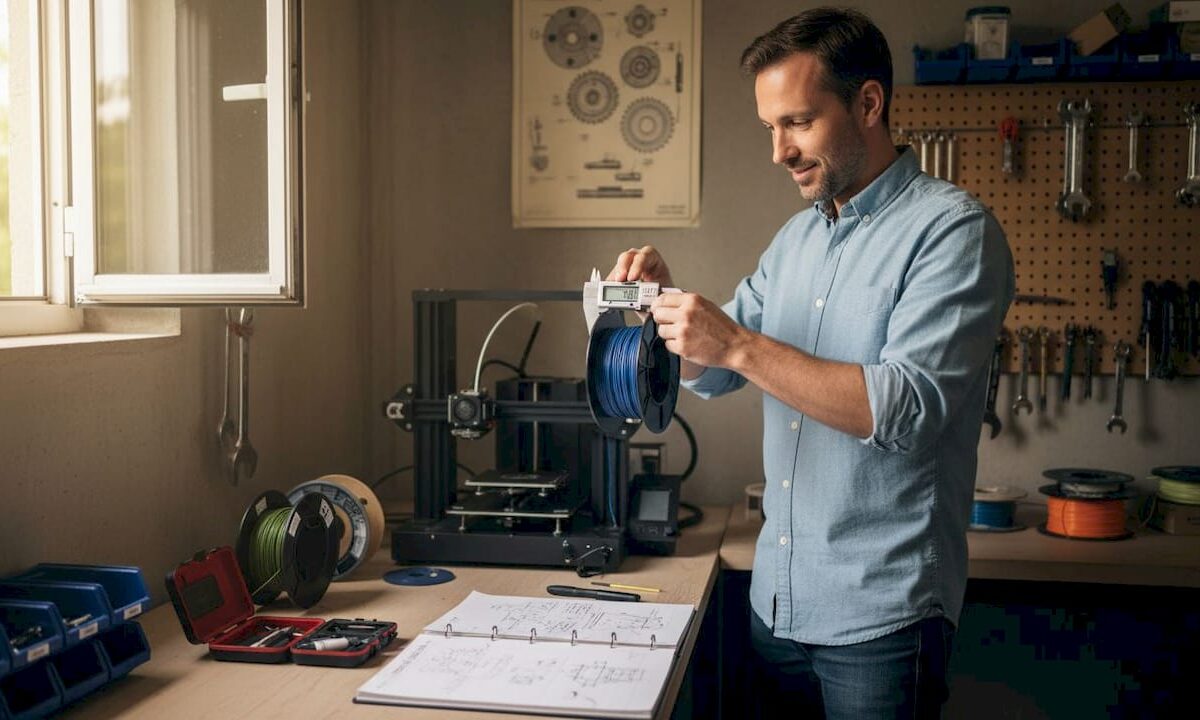
Engineer checks filament tolerance with calipers

Custom filament printing guide: precision for prototypes


TL;DR:

  • Filament diameter tolerance of ±0.02mm ensures consistent, professional-grade 3D printing results.
  • Proper material choice, printer calibration, and controlled environment are crucial for accuracy and repeatability.
  • Systematic verification and measurement across batches prevent variability and enhance manufacturing reliability.

Even a 0.05mm variation in filament diameter can push a prototype over tolerance, trigger failed prints, and delay your product launch by days or weeks. For product developers and small manufacturing teams, that is not a minor inconvenience. It is a real business cost. ±0.02mm filament tolerance is the benchmark separating consistent, professional-grade output from frustrating batch failures. This guide walks you through every stage of custom filament printing, from material selection and printer setup to parameter tuning and quality verification, so you can produce parts that hold tolerance and hold up under real-world conditions.

Table of Contents

Key Takeaways

Point Details
Choose the right filament Proper filament type and tolerance are the foundation for consistent, successful prints for prototypes and production.
Calibrate and control environment Printer calibration and environmental controls are just as critical as material choice for avoiding common failures.
Optimize print parameters Fine-tuning orientation and slicer settings can dramatically boost part strength and accuracy.
Verify print quality Regular, measured quality checks catch inconsistencies early, ensuring confidence in every print run.
Expert help accelerates results Partnering with a specialized 3D printing service speeds up learning, minimizes costly mistakes, and delivers reliable prototypes.

Understand filament types and requirements

Choosing the right filament is not just about matching color to your brand palette. Material selection determines whether your functional prototype survives a stress test, fits into an assembly, or ships with consistent surface quality across a batch. Getting this decision right upfront saves you rework time and material cost.

Core filament types and where they fit:

  • PLA: Easy to print, dimensionally stable, ideal for concept models and display prototypes. Not suited for heat or mechanical stress.
  • PETG: Balances strength and printability. Great for functional parts, but it is hygroscopic and requires drying before use to avoid bubbles and stringing.
  • ABS: Tough and heat-resistant, essential for functional housings and mechanical parts. Needs an enclosure to prevent warping.
  • Nylon: High impact resistance and flexibility, but absorbs moisture aggressively. Drying is non-negotiable.
  • Carbon fiber, glow-in-the-dark, and metal-filled filaments: Abrasive composites that demand hardened steel nozzles, or you will wear through a standard brass nozzle within hours.
Filament Enclosure needed Drying required Nozzle type
PLA No Rarely Brass
PETG Optional Yes Brass or hardened
ABS Yes Rarely Brass
Nylon Yes Yes Hardened steel
Carbon fiber Yes Yes Hardened steel

Tolerance matters more than most developers realize. A filament rated at ±0.02mm produces under 1% volumetric variation, keeping flow rates consistent across long print runs. Once you step down to ±0.05mm, you are looking at nearly 3% volumetric swing, which shows up as over-extrusion on some layers and under-extrusion on others. You can find more material-specific advice in our prototyping filament guide or dig into a side-by-side breakdown with PLA vs PETG vs ABS.

Color additives also affect printability. Dark pigments, particularly black, absorb more heat and may require a slightly lower temperature than a natural or white version of the same material. Always run a temperature tower when switching colorways on a critical production run.

Pro Tip: Store all hygroscopic filaments in sealed containers with silica gel desiccant between print sessions. Even a few hours of open-air exposure in a humid environment can ruin a spool of Nylon or PETG.

Set up your printer for custom filament printing

Once your material is chosen, your printer and workspace need matching attention. A well-selected filament will still produce poor results if the hardware delivering it is out of calibration or operating in an uncontrolled environment.

Start with these setup steps in order:

  1. Level the print bed. A bed that is even 0.1mm off across its surface will cause adhesion failures on the first layer, which cascades into every layer above it.
  2. Clean the hot end. Residual material from a previous filament run causes contamination, especially when switching from a high-temperature material to a lower-temperature one.
  3. Check the extruder tension. Too tight and you grind the filament. Too loose and steps are skipped. Both cause inconsistent flow.
  4. Calibrate your extruder steps per mm. Mark 100mm of filament, extrude it, and measure what actually moved. Adjust until the numbers match.
  5. Set nozzle diameter to match your job. Abrasive filaments require a hardened nozzle. Standard brass erodes fast under carbon fiber or metal-filled materials.

Environment matters too. ±0.05mm diameter variation creates a 2.8% volumetric swing that no software setting can fully compensate for, but ambient temperature swings make things worse. ABS requires a fully enclosed printer to maintain a consistent chamber temperature and prevent warping from drafts. Hygroscopic materials need controlled humidity both in storage and during printing.

A stable printer in a controlled workspace produces more consistent results than a high-end machine sitting in a drafty, humid shop floor. Environment is not optional.

Printer check What to look for Tool needed
Bed level Even first layer adhesion Feeler gauge or probe
Extruder calibration 100mm extrusion accuracy Ruler or calipers
Hot end cleanliness No residue or discoloration Cold pull or cleaning filament
Nozzle condition No erosion on tip Visual inspection

For batch production specifically, you will want to build a pre-run checklist. Our low-volume manufacturing tips walk through setup routines designed to keep quality consistent across dozens of parts. If you are deciding between printer types for your workflow, choosing the right printing type covers that decision in detail.

Pro Tip: Run a small calibration cube before every new filament spool or environmental change. It takes five minutes and tells you immediately if something has drifted.

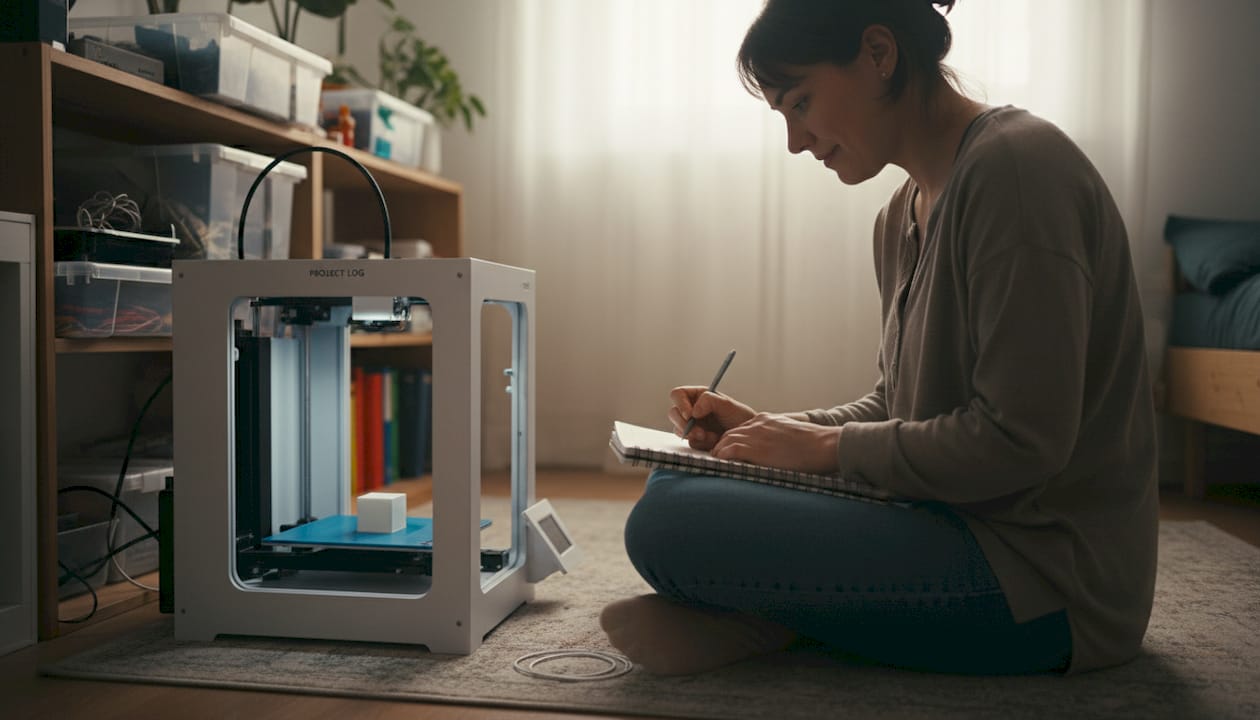
Woman calibrates 3D printer for new filament

Optimize print parameters for strength and accuracy

Once hardware is ready, fine-tuning print parameters maximizes your results. Slicer settings are where most developers either gain or lose the edge on part performance.

Orientation is the most underestimated variable in filament printing. FDM parts are anisotropic, meaning they are stronger along the layer plane than perpendicular to it. Placing a part so its primary load axis runs parallel to the print bed increases stiffness dramatically. Parameter optimization, including orientation and layer height adjustments, has been shown to boost part stiffness by 81 to 128%. That is not a marginal gain. It is the difference between a prototype that passes mechanical testing and one that snaps during the first use cycle.

Follow this sequence when dialing in parameters for a new job:

  1. Set orientation first. Analyze load direction and place the strongest axis in line with expected stress.
  2. Choose layer height. Thinner layers (0.1mm to 0.15mm) improve surface detail and interlayer bonding for functional parts. Thicker layers (0.2mm to 0.3mm) speed up prototyping when detail is less critical.
  3. Tune temperature. Advanced materials like PETG and Nylon run hotter and benefit from a temperature tower to find the sweet spot for flow and layer adhesion without stringing.
  4. Set print speed. Slower speeds improve accuracy. For precision prototypes, drop below 40mm/s on perimeters.
  5. Adjust cooling. PLA needs active cooling. ABS and Nylon need minimal or no cooling to prevent layer delamination.

Black filaments deserve a specific note. Because of their higher heat absorption, black variants of the same base material often need a temperature reduction of 5°C to 10°C compared to neutral colors. Skipping this step leads to over-melting and oozing on fine features.

For guidance on building print-ready geometry that supports these parameters, our resource on designing reliable prints and optimizing your CAD workflow are worth your time before you hit slice.

Pro Tip: Never rely on a slicer’s default profile for a production run. Always run a first-article part with your specific filament, nozzle, and environment before committing to a full batch.

Quality verification and troubleshooting

With parameters optimized, assess and fix your results for business-grade consistency. Printing one good part is not the goal. Printing forty identical good parts is.

Start with visual inspection on every part:

  • Layer lines: Should be uniform in height and spacing. Inconsistent lines point to extruder slippage or filament diameter variation.
  • Wall smoothness: Rough or pitted walls signal moisture in the filament or a clogged nozzle.
  • Color consistency: Streaks or shade shifts mid-print indicate contamination or temperature instability.

After visual checks, measure. Use calipers to verify critical dimensions against your CAD model. Tolerance variations at ±0.02mm create under 1% dimensional error, while ±0.05mm filament pushes that beyond 2.8%. For parts going into assemblies, even 0.1mm of deviation can mean a misfit. Document your measurements across each batch so you can track drift over time.

Iteration is not failure. Running three calibration parts before a 50-piece batch is a quality investment, not wasted material.

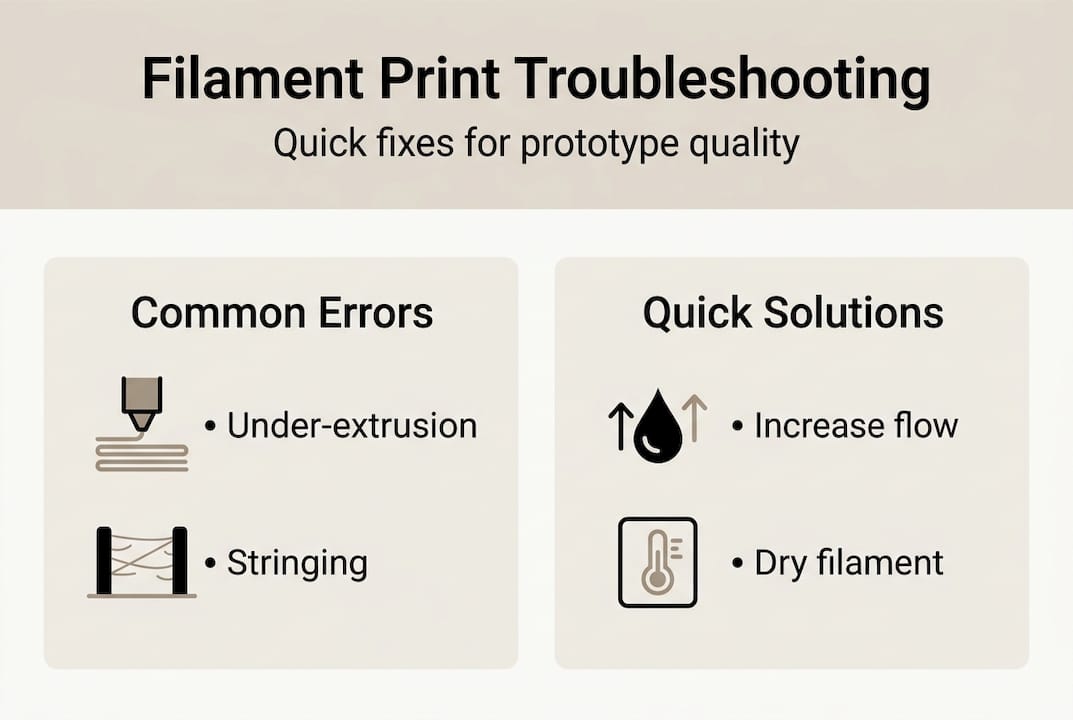
Common error Symptom Solution
Under-extrusion Thin walls, gaps in layers Increase flow rate, check extruder tension
Over-extrusion Blobbing, rough surfaces Reduce flow rate or temperature
Warping Lifted corners Use enclosure, increase bed adhesion
Stringing Fine threads between features Increase retraction, reduce temperature
Layer delamination Cracks between layers Increase temperature, reduce cooling

Infographic with filament troubleshooting and solutions

For visual references of what precision output actually looks like at each stage, our prototype quality examples show real parts printed to specification.

Why most guides miss what actually matters in custom filament printing

Most online guides focus on slicer profiles and temperature charts. Those things matter, but they are not the ceiling. The real ceiling for manufacturing reliability is filament consistency and systematic verification across batches.

Here is what experience teaches you: even a premium slicer profile running on a well-calibrated machine cannot compensate for a filament spool with inconsistent diameter. If the material feeding into your nozzle varies by 0.05mm or more throughout the spool, your flow rate fluctuates regardless of your settings. You can tune all day and still see surface variation on parts 20 and 40 that looked fine on parts 1 and 2.

The second thing most guides skip is the difference between a successful single print and a repeatable process. For a product developer or small manufacturer, repeatability is everything. One good prototype means little if your next run of 30 parts has visible variation. Build a verification step into every run. Measure early, measure often, and document what you find. That process discipline is what separates hobbyist output from professional manufacturing output.

Our additional prototyping strategies go deeper into building that kind of repeatable workflow.

Take your custom filament printing further with CC3DLabs

If you are hitting the limits of what in-house printing can deliver for precision, batch consistency, or advanced materials, working with an experienced team changes the equation.

https://cc3dlabs.com

At CC3D Labs, near Philadelphia, we specialize in custom filament-based 3D printing for product developers and manufacturing teams who need parts that perform, not just parts that look right on a screen. Our 3D printing services cover everything from single prototypes to production runs, with material expertise and quality verification built into every job. Want to know what is possible before you commit? See our printing capabilities and browse real-world prototype case studies to see the standard we hold our work to. Reach out for a free estimate and let us help you get it right the first time.

Frequently asked questions

What is the ideal filament tolerance for precision 3D printing?

A filament diameter tolerance of ±0.02mm delivers the best print consistency for prototypes and low-volume manufacturing, keeping volumetric variation under 1%.

Why do some filaments require drying before printing?

Hygroscopic filaments like PETG and Nylon absorb moisture from the air, which causes bubbling, poor layer adhesion, and stringing unless the material is thoroughly dried before printing.

How does orientation impact 3D printed part strength?

Optimizing part orientation during slicing aligns the strongest axis with the load direction, with research showing stiffness improvements of up to 128% compared to default orientations.

How do you check if your print is accurate?

Measure critical dimensions with calipers and compare them to your CAD model. Tolerance variations above ±0.05mm can push dimensional error past 2.8%, which is unacceptable for assembly-fit parts.

Designer reviewing online 3D printing estimate

Get precise online estimates for custom 3D printing


TL;DR:

  • Online quoting speeds up 3D printing workflows and helps with rapid design decisions.
  • Automated estimates are generally accurate for standard geometries but less reliable for complex features.
  • Preparing models carefully and validating quotes with manual reviews can improve cost accuracy and project success.

Waiting three days for a quote when your prototype deadline is tomorrow is not a workflow problem. It’s a competitive disadvantage. Traditional manual quoting slows engineering cycles, creates budget uncertainty, and forces developers to guess at costs during the most critical design phases. Instant quoting systems automate pricing by analyzing uploaded STL files, material choices, print time, and part complexity in seconds. But speed comes with trade-offs. This guide breaks down how online estimates work, where they fall short, and the practical strategies you can use to get numbers you can actually build a budget around.

Table of Contents

Key Takeaways

Point Details
Speed boosts workflow Instant online estimates slash prototyping delays and empower rapid engineering iteration.
Check itemized costs Always review the detailed breakdown—material, machine, labor, post-processing—for transparency and accuracy.
Know quoting limits Complex geometries and post-processing often require manual review, so buffer for hidden costs.
Design for accuracy Optimizing designs for quoting—minimizing supports and overhangs—produces more reliable instant estimates.
Benchmark for best value Compare multiple quoting platforms and ask for engineer reviews to ensure cost and quality alignment.

How online estimates transform 3D printing workflows

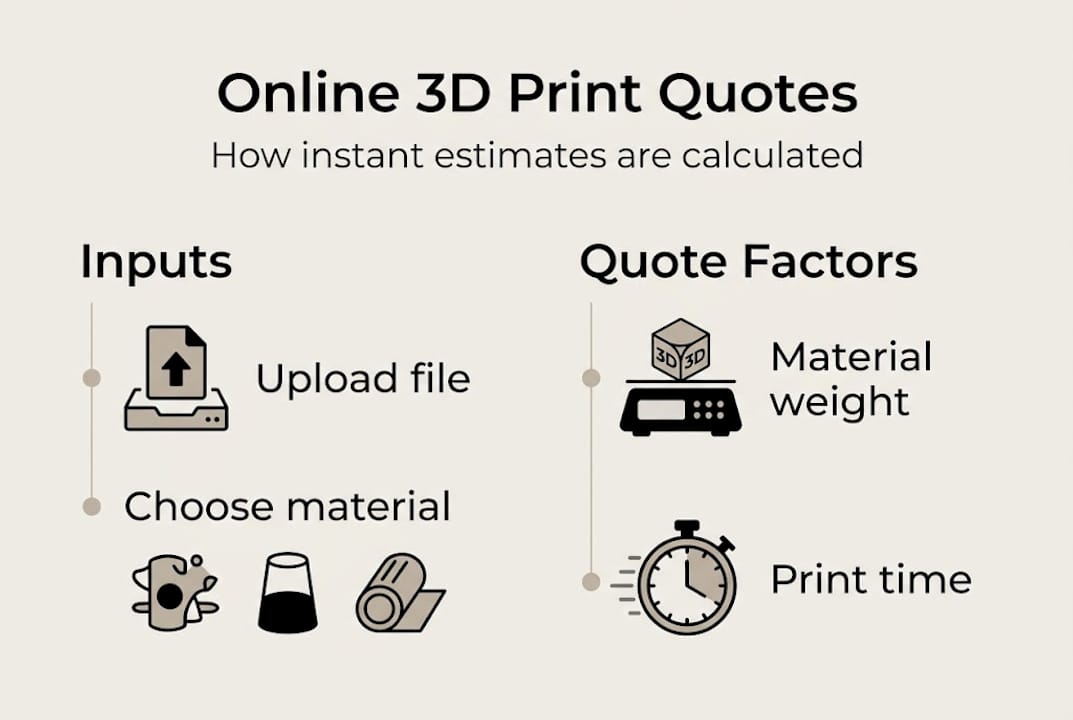
An online estimate, sometimes called an instant quote, is an automated pricing system that reads your 3D model file and returns a cost breakdown without human intervention. You upload a file, select a material and finish, and the platform calculates price based on volume, geometry, and machine parameters. The result arrives in seconds rather than days.

For product developers and engineers, this changes everything about early-stage design. You can test five material options in five minutes. You can compare a solid infill against a lightweight lattice structure and see the price difference immediately. Online estimators accelerate prototyping by providing immediate feedback on design changes, material trades, and quantity discounts. That feedback loop is what makes iterative design actually fast.

Infographic showing 3D print online quote process

Manual quoting, by contrast, typically takes 24 to 72 hours per request. For a team running ten design iterations per week, that delay compounds fast. Shapeways instant quoting platforms have demonstrated that automated systems can reduce quote turnaround from days to under a minute for standard geometries. That is not a marginal improvement. It is a fundamentally different workflow.

Here are the most common use cases where online estimates deliver real value:

  • Rapid prototyping: Get cost feedback before committing to a design revision
  • Material comparison: Instantly compare PLA, PETG, ABS, and nylon pricing for the same geometry
  • Functional part production: Estimate unit economics for small batch runs before scaling
  • Design iteration: Adjust wall thickness, infill, or orientation and see cost impact in real time
  • Budget planning: Establish rough cost ranges early in the product development cycle

Pairing this speed with a solid optimizing CAD workflow process means your files are quote-ready before you even hit submit. The engineers who get the most out of instant quoting are the ones who treat file preparation as part of the design process, not an afterthought.

Demystifying 3D printing cost calculation: What’s in an online quote?

Most engineers treat the quote number as a black box. Understanding what’s inside it gives you real leverage. STL file parsing for volume, surface area, and bounding box forms the foundation of every automated estimate. From there, the system estimates print time using slicing simulation or heuristics, then applies a cost formula.

The standard formula looks like this: Material cost (weight × $/g) + Machine cost (hourly rate × print time) + Labor + Overhead + Markup. Each variable carries its own uncertainty. Material weight depends on infill density. Machine time depends on layer height and print speed. Labor and overhead vary by provider.

Engineer calculating 3D printing quote by hand

Here is a simplified example of how those components stack up for a mid-complexity functional bracket (illustrative industry numbers, not CC 3D Labs pricing):

Cost component Basis Example amount
Material 45g × $0.08/g $3.60
Machine time 2.5 hrs × $4.00/hr $10.00
Labor Setup and removal $5.00
Overhead Facility, utilities $3.00
Markup 30% $6.48
Total estimate $28.08

The quoting sequence for a custom part typically follows these steps:

  1. Upload STL file to the platform
  2. System parses geometry for volume, surface area, and bounding box
  3. Slicer simulation estimates print time and material usage
  4. Cost formula applies material, machine, labor, and overhead rates
  5. Markup is added and the estimate is returned to the user
  6. Optional: engineer review for flagged complex geometries

For a deeper look at how these numbers are assembled, the cost calculator guide breaks down the math behind each variable. Understanding itemized quoting breakdowns also helps you spot when a platform is bundling costs that should be line items.

Pro Tip: Always request an itemized cost breakdown rather than a single total. If a platform only shows you one number, ask for a manual review on any prototype that has thin walls, internal channels, or significant overhangs. Those features are where automated estimates lose accuracy fast.

Recognizing the limits: When online quotes fall short

Instant quoting is powerful, but it has a ceiling. Complex geometries can fail automated analysis entirely. Thin walls below 1.2mm, extreme overhangs, and internal lattice structures push most quoting algorithms into uncertain territory. The system either flags the file for manual review or, worse, returns a price that does not reflect the actual print difficulty.

Post-processing is the biggest blind spot. Post-processing costs can increase final invoices by 30 to 40 percent, and most instant quoting systems do not model this accurately. Support removal, sanding, painting, and inspection are labor-intensive steps that vary by part geometry in ways that are hard to automate.

Here is a quick comparison of instant quoting versus manual engineering review:

Factor Instant online quote Manual engineering review
Speed Seconds to minutes 24 to 72 hours
Transparency Variable High
Accuracy (standard parts) Good Excellent
Accuracy (complex parts) Poor to moderate Excellent
Post-processing included Rarely Usually
Cost Free or low May carry a fee

Common hidden costs that online estimates frequently miss include:

  • Support structure material and removal labor
  • Surface finishing (sanding, priming, painting)
  • Dimensional inspection and quality documentation
  • Failed print reprints (especially for complex geometries)
  • Expedited turnaround fees

For tips for accurate instant quoting on complex parts, the key is knowing when to escalate. If your part has features that would give a human engineer pause, an automated system will not catch them reliably. Reviewing instant quoting system alternatives can also reveal platforms with more robust manual review pipelines built into their workflows.

The cost drivers in 3D print quotes are more nuanced than most automated systems capture, particularly when functional performance requirements enter the picture.

How to get accurate online estimates: Practical engineering strategies

Getting a reliable estimate is not just about picking the right platform. It is about preparing your model and your process so the automated system has everything it needs to return a meaningful number.

Here are the key steps for reliable instant quoting:

  • Optimize your model first: Clean up non-manifold geometry, remove duplicate surfaces, and confirm wall thickness meets minimum print requirements before uploading
  • Select platforms with itemized breakdowns: Prioritize platforms with itemized breakdowns and engineer review options, especially for prototypes and functional parts
  • Request manual review for edge cases: If your part has overhangs greater than 45 degrees, thin walls, or complex internal geometry, flag it for human review
  • Compare multiple estimators: Run the same file through two or three platforms and compare results. Significant variance signals a part that needs manual attention
  • Use benchmark quoting calculators to cross-check: Independent calculators help you validate whether a platform’s estimate is in a reasonable range

Pro Tip: For prototypes, orient your model to minimize support structures before uploading. A part printed at a 45-degree angle often uses significantly less support material than one printed flat, and that directly reduces both material cost and post-processing labor. Small orientation decisions at the design stage translate into real savings in the estimate.

For functional parts, always benchmark your online quote against a manual review before committing to a production run. The CAD estimate form at CC 3D Labs allows you to submit files for review with specific functional requirements noted, which gives our team the context to catch cost variables an automated system would miss.

Also review quoting platform comparisons to understand which services offer the transparency and engineering support your project actually requires. Not all platforms are built for the same use cases, and choosing the wrong one for a functional part run can cost you more than the time you saved on quoting.

The engineering reality: Instant quotes vs. true costs

Here is something most online quoting platforms will not tell you: the number on your screen is a starting point, not a contract. We have seen engineers treat instant estimates as final budgets, only to face invoices that are 30 to 40 percent higher once post-processing and quality checks are factored in.

The math behind this is straightforward. Material is only 15 to 30% of total print cost. Machine time, labor, and failure rates (typically 5 to 10 percent for complex geometries) dominate the actual invoice. Instant quoting systems are optimized to calculate material and machine time accurately. They are not optimized for the human labor that happens after the print finishes.

The race-to-the-bottom pricing you see on some platforms is a red flag, not a deal. Providers who compete purely on quote price often cut corners on material quality, machine calibration, or post-processing thoroughness. For a display model, that might be acceptable. For a functional part that goes into a product, it is a liability.

Our recommendation for low-volume manufacturing tips is to always buffer your budget by at least 20 percent above the online estimate for functional part runs. For complex prototypes, budget for at least one reprint. Use the instant quote as a directional signal, then validate it with a manual review before finalizing your project budget. The engineers who do this consistently are the ones who hit their timelines without budget surprises. See how custom print job selection factors into getting the right service match for your specific application.

Level up your 3D printing workflow with trusted solutions

Applying these strategies is straightforward when you have a service provider who builds transparency into every quote. At CC 3D Labs, we offer both instant online estimates and detailed manual reviews for complex prototypes and functional parts.

https://cc3dlabs.com

Our 3D printing services are designed for product developers and engineers who need accurate numbers, not ballpark figures. Whether you are exploring printing prototypes and functional parts for the first time or managing a batch production run, our team provides itemized breakdowns that reflect real costs. Request a custom print quote today and see the difference that engineering-backed quoting makes for your project timeline and budget.

Frequently asked questions

How accurate are online estimates for 3D printing?

Online estimates are typically reliable for standard geometries but often underrepresent total costs for complex features or finishing work. Post-processing costs can increase final invoices by 30 to 40 percent above the initial automated quote.

What file formats are best for automated online quoting?

STL files are the standard for 3D print quotes because they provide the volume and geometry data needed for automated cost calculation. Parsing STL files for volume, surface area, and bounding box is the foundation of every instant quoting system.

Can online estimates factor in quantity discounts?

Yes, many instant quoting platforms adjust pricing automatically based on order quantity. Immediate feedback on quantity discounts is one of the strongest advantages of automated estimators for batch prototype planning.

How can I make my model easier to quote instantly?

Simplify your geometry by minimizing overhangs and support-heavy features, and choose an orientation that reduces material usage before uploading. Minimizing supports and overhangs early in the design process produces more reliable automated estimates and lower actual print costs.

Designer reviews 3D-printed parts at workspace

Top 4 Xometry 3D Printing Alternatives 2026

The search for reliable 3D printing services keeps growing as more people and businesses look for quality, speed, and affordable options. With so many platforms offering different features and pricing structures, finding the right fit can be both exciting and challenging. Some focus on producing complex parts while others aim for fast delivery or personalized support. The variety can feel overwhelming but also opens the door to new possibilities. What happens when you compare some leading choices head to head

Table of Contents

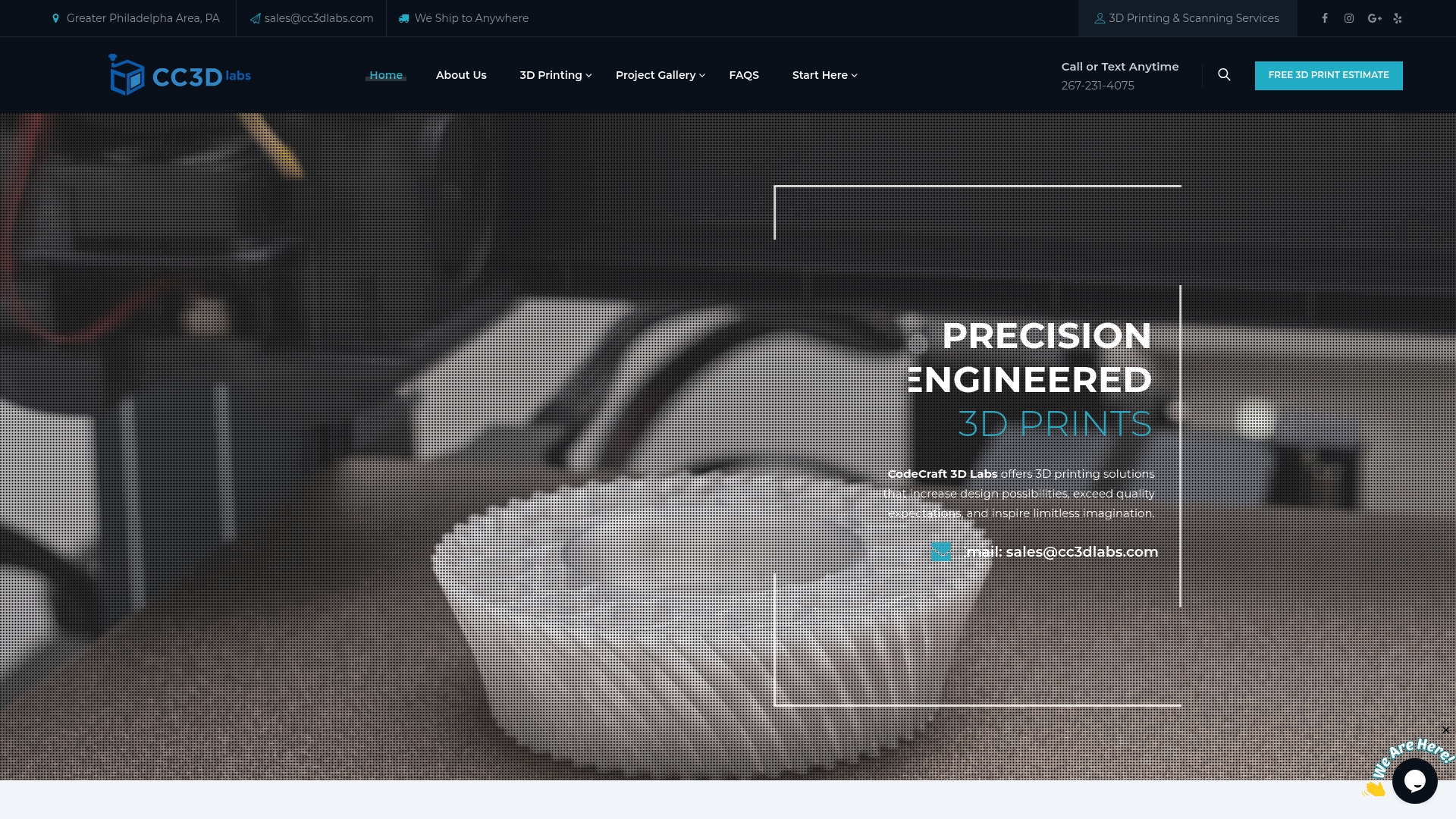
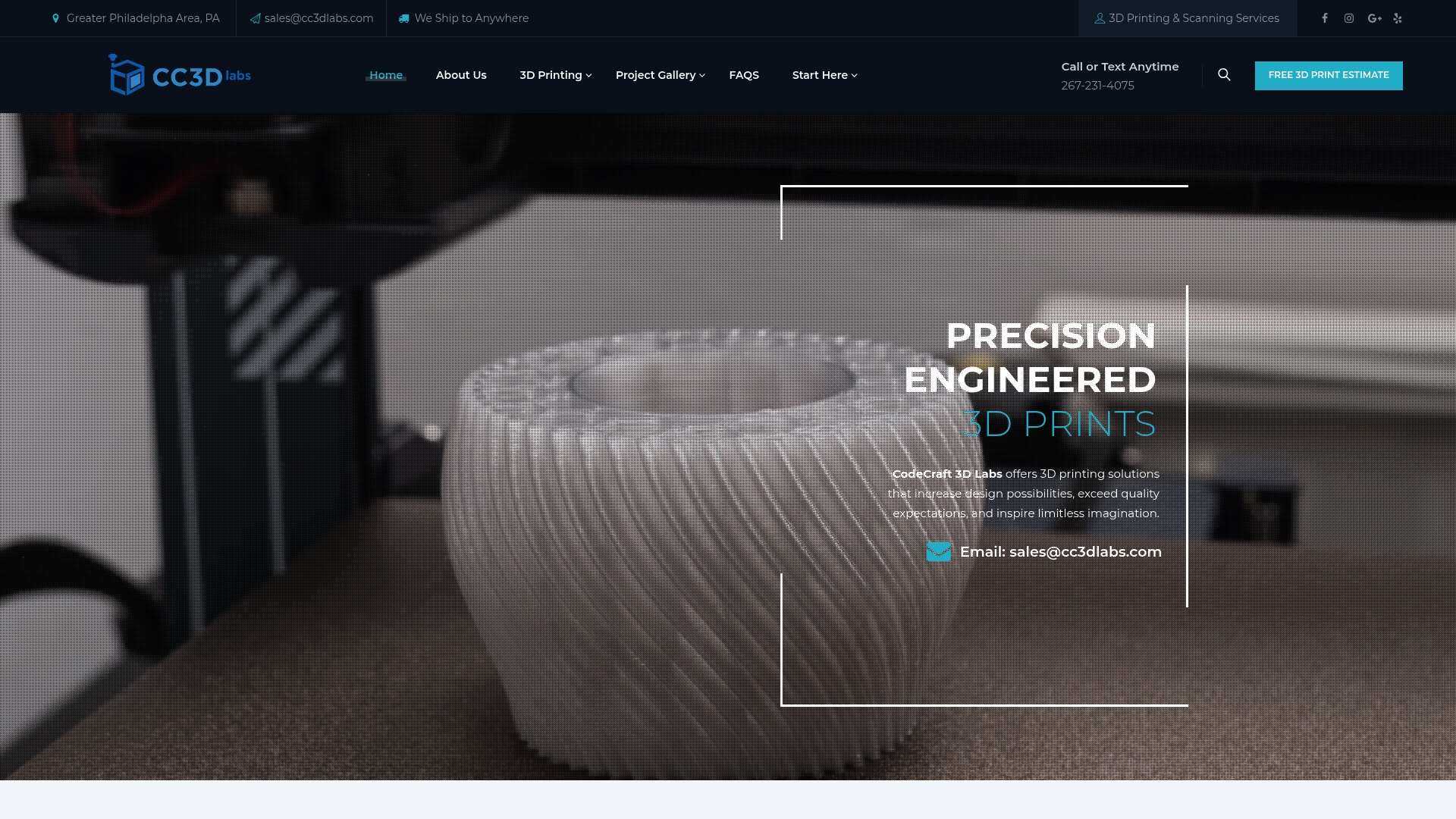
CC 3D Labs

Product Screenshot

At a Glance

CC 3D Labs is the clear, top-tier choice for businesses and product developers who need precise, reliable filament based 3D printing and professional scanning near Philadelphia. Their combination of quality prints, fast turnarounds, and local pickup with worldwide shipping makes selection easy.

Core Features

CC 3D Labs specializes in filament based 3D printing, 3D scanning, and CAD services for prototypes, functional parts, and batch production. They provide multi color and multi material printing, professional handheld 3D scanning (accuracy to ~0.1 mm), on demand manufacturing, and hands on design support.

Pros

  • Wide material selection: They print with advanced filaments including specialty materials so you can test functional properties and cosmetic finishes in one shop.

  • Integrated scanning and CAD: professional handheld 3D scanning (accuracy to ~0.1 mm) plus 3D modeling and CAD services speed iteration and reduce back and forth with external vendors.

  • Fast local turnaround: Local service near Philadelphia shortens review cycles and supports quick iterative testing for time sensitive projects.

  • International shipping options: You get local pickup when convenient and shipping worldwide when projects scale beyond the region.

  • Free estimates and support: Free online estimates and service support lower your procurement friction and help plan budgets before committing.

Who It’s For

If you are a product developer, a small manufacturer, or a business needing reliable prototypes and production parts with quick iteration cycles, CC 3D Labs fits your workflow. You benefit most when accuracy, material variety, and fast feedback matter.

Unique Value Proposition

CC 3D Labs pairs professional, high quality printing with professional handheld 3D scanning (accuracy to ~0.1 mm) and in house CAD services so you receive end to end support from concept to verified part. Their emphasis on durable, accurate parts and multi color, multi material options gives you both functional testing and production ready finishes. Local presence near Philadelphia speeds turnaround and enables hands on collaboration while worldwide shipping and batch production capability allow scale. The result is an industry leading mix of technical precision, practical speed, and design support that smart buyers choose when project risk and time are critical.

Real World Use Case

A product developer in Philadelphia uses CC 3D Labs for rapid prototyping of enclosures and mechanical parts, harnessing multi material printing to test seals and mounts, then using professional handheld 3D scanning (accuracy to ~0.1 mm) for repeatable verification before moving to small batch production.

Pricing

Pricing details are not published on the site; customers request a free quote to get project specific pricing. That approach lets CC 3D Labs tailor estimates to materials, print resolution, and batch size.

Website: https://cc3dlabs.com

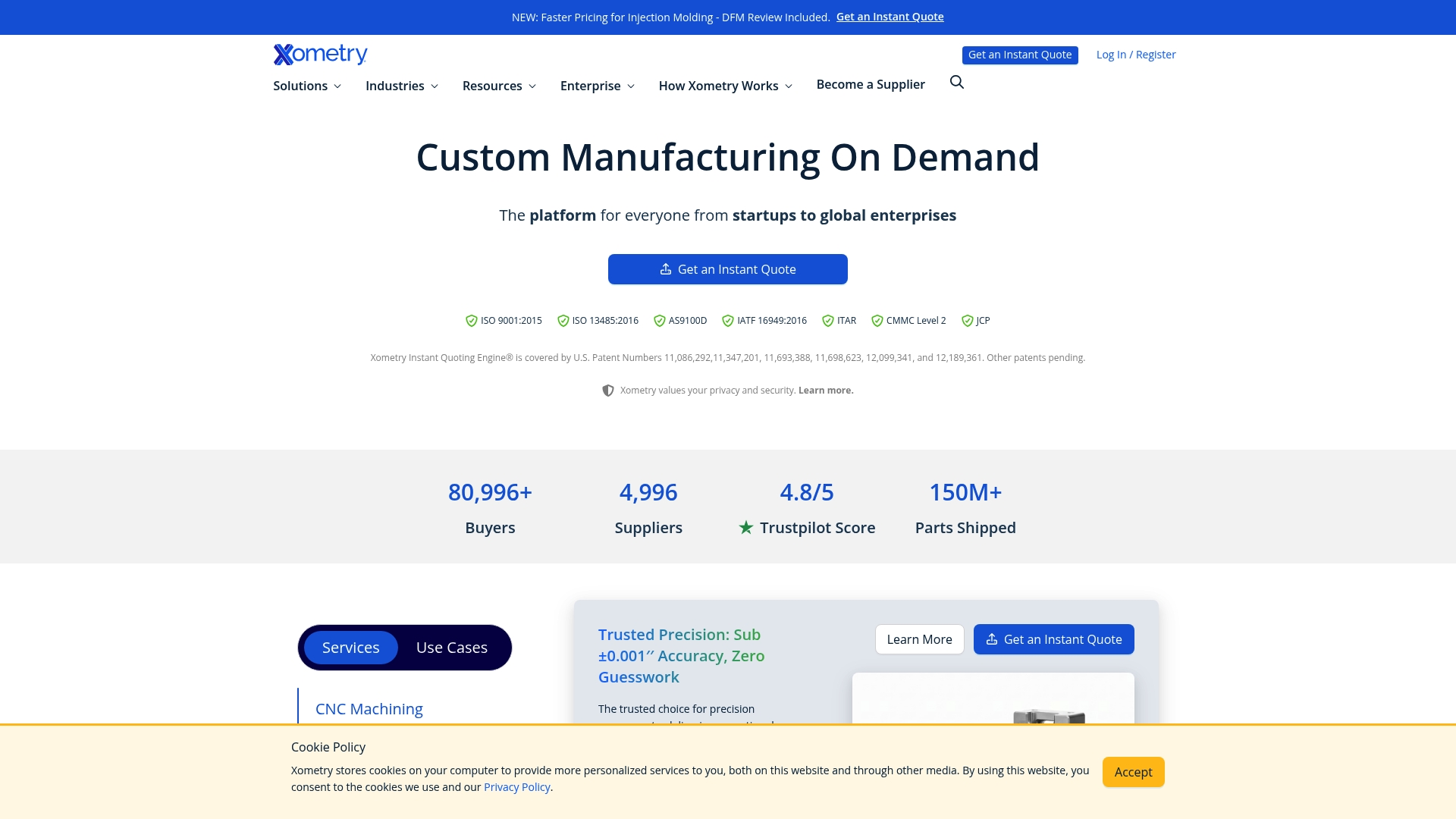
Xometry

Product Screenshot

At a Glance

Xometry is a platform for on demand custom manufacturing that serves startups through global enterprises with fast quoting and broad process coverage. Its bottom line: reliable digital workflows and a large supplier network for prototypes and production.

Core Features

Xometry offers instant quoting through the Instant Quoting Engine and supports diverse manufacturing methods including CNC machining, 3D printing, and Injection Molding. The platform pairs quotes with a global network of certified suppliers and a resource center for design guidance.

Pros

  • Fast, reliable quoting: The Instant Quoting Engine gives immediate price and lead time feedback so you can plan procurement without waiting for manual estimates.
  • Wide process and material selection: The platform supports multiple manufacturing methods and materials that scale from prototypes to production runs.
  • Scalable capacity: Suppliers in the network allow you to move from single prototypes to high volume production without changing platforms.
  • Certified quality standards: Xometry reports quality controls and certifications such as ISO 9001:2015 that support traceability for regulated industries.
  • Transparent digital workflows: Order tracking and supplier communication provide traceability and centralized documentation for manufacturing projects.

Cons

  • The platform assumes familiarity with manufacturing terms which can create a learning curve for users new to fabrication.
  • Pricing depends on part complexity and volume so detailed estimates often require direct consultation for accurate budgeting.
  • The service model limits physical interaction since work happens through the platform and partner shops rather than a single local facility.

Who It’s For

Xometry suits manufacturers, product designers, startups, and large enterprises that need fast, reliable access to multiple manufacturing processes. If you manage prototypes, bridge to production, or require certification backed suppliers, this platform fits those workflows.

Unique Value Proposition

Xometry combines automated quoting and a global supplier network to reduce sourcing friction for custom parts. That pairing lets businesses shorten lead times while keeping options open for materials, processes, and production scale.

Real World Use Case

A product team needing rapid prototyping and subsequent metal or plastic production receives instant quotes, selects a manufacturing method, and shifts to higher volume suppliers within the same platform. The result is fewer vendor handoffs and clearer timelines.

Pricing

Pricing is project dependent and generated per part or assembly through instant quotes. You get an immediate estimate on submission and can request detailed quotes or consultations for complex geometries or larger volume runs.

Website: https://xometry.com

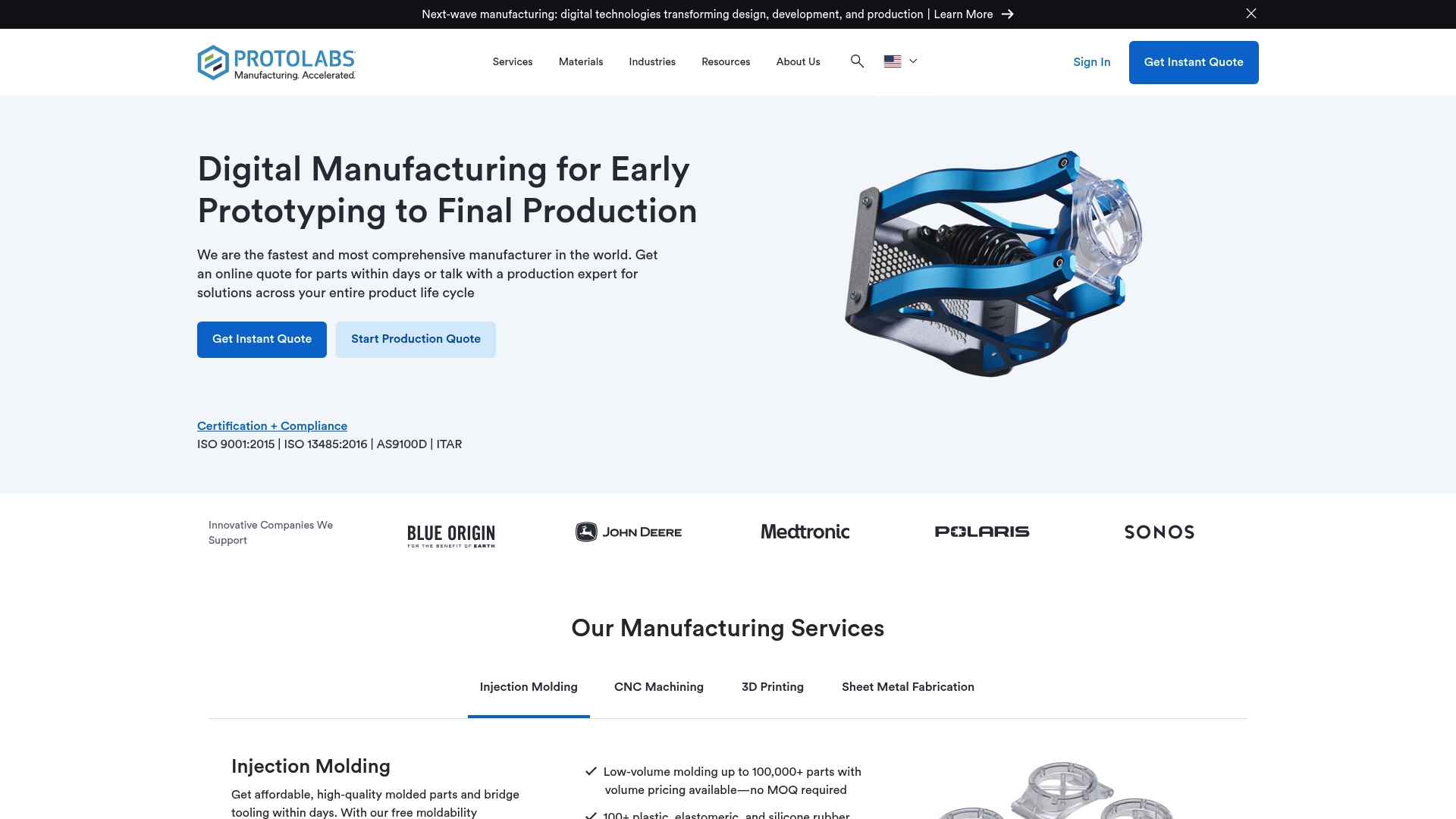
Protolabs

Product Screenshot

At a Glance

Protolabs is a digital manufacturing provider focused on rapid prototyping and low volume production with a strong emphasis on automation and speed. It fits businesses that need quick turnarounds and consistent quality from prototype to short run production.

Core Features

Protolabs provides fast online quoting and automated order processing paired with Design for Manufacturability analysis to catch issues early. The platform supports injection molding, CNC machining, 3D printing, and sheet metal fabrication with real time pricing and a broad material selection.

Pros

  • Highly automated process: Automation reduces manual steps so orders move from upload to production faster than traditional suppliers.

  • Quick turnaround times: Many orders complete in days according to the company’s published lead times which shortens development cycles for product teams and engineers.

  • Wide service offering: The mix of injection molding, CNC, 3D printing, and sheet metal covers prototyping and low volume production needs.

  • Built in design feedback: DFM guidance helps catch manufacturability issues before parts reach the shop floor which lowers rework risk.

  • Global digital factories: Multiple production sites allow distributed manufacturing and can reduce shipping time for international projects.

Cons

  • Requires CAD files for best results: The platform performs best when you supply fully finished CAD which can be a barrier for early concept work.

  • Less personal touch for complex jobs: Heavy reliance on the digital platform means highly custom or artisanal projects receive less bespoke interaction.

  • Higher pricing for some low volumes: Very low volume runs or highly complex parts can be more expensive compared with handcrafted local shops.

Who It’s For

Protolabs suits engineers, product developers, and manufacturers who prioritize speed, repeatability, and traceable feedback during design validation. Teams that need functional prototypes and quick small batch production will get the most value from the service.

Unique Value Proposition

Protolabs combines instant quoting, process automation, and DFM feedback to deliver predictable lead times and fewer surprises. That combination turns iterative product development into a faster, more measurable workflow for engineering teams.

Real World Use Case

A startup developing a consumer electronic device uploads final CAD and uses Protolabs to produce functional prototypes for user testing. After validation the same service moves the design into low volume injection molding for an initial production run.

Pricing

Pricing varies based on material, process, complexity, and volume with quotes generated instantly online. Project teams can get immediate cost visibility which helps compare options during design reviews.

Website: https://protolabs.com

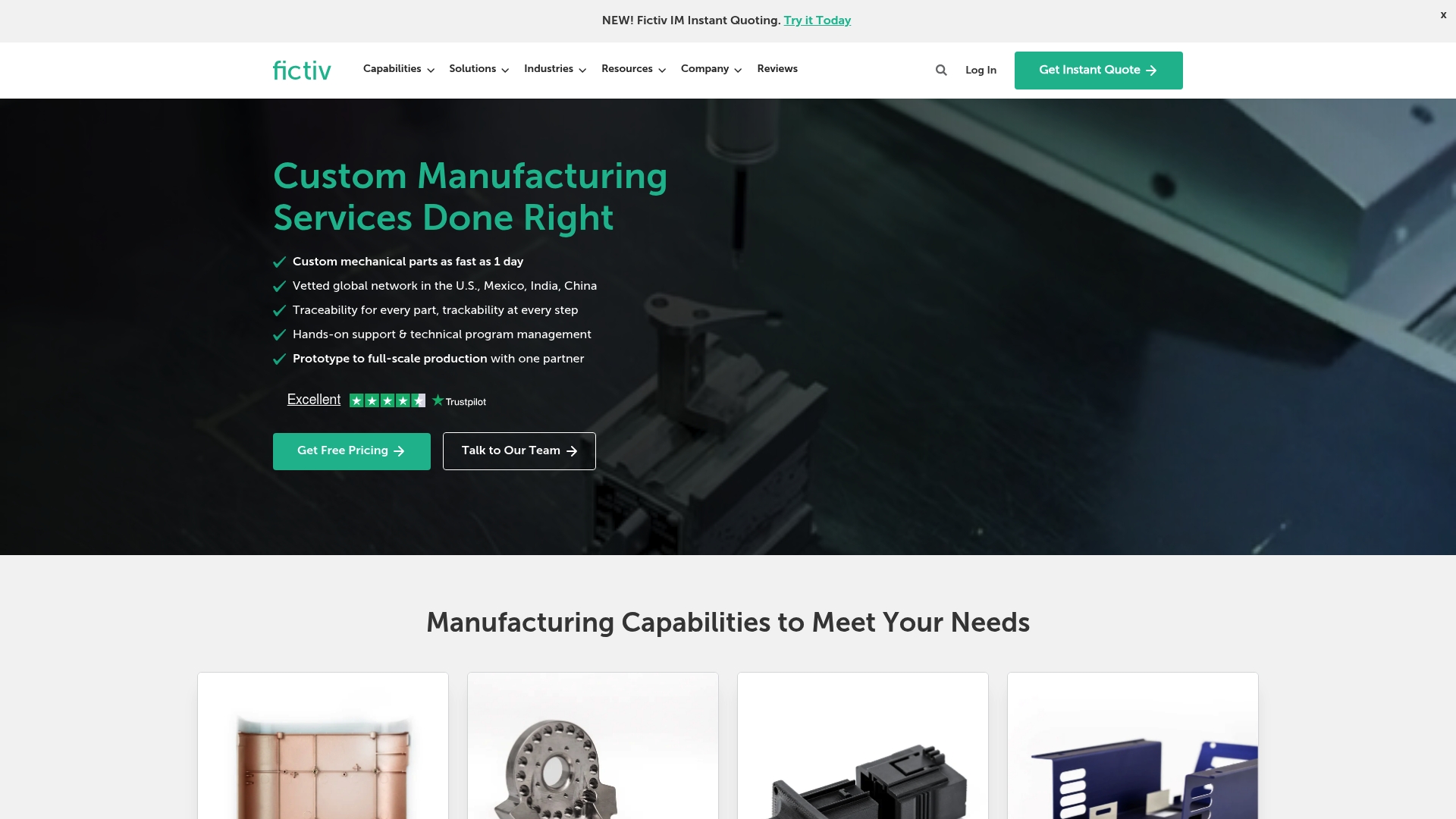
Fictiv

Product Screenshot

At a Glance

Fictiv provides a managed digital manufacturing platform that moves projects from prototype to production with speed and visibility. Its strength lies in instant quoting and a vetted global network that supports CNC, 3D printing, injection molding, and sheet metal.

Fast. Clear. Traceable.

Core Features

The platform delivers DFM feedback during quoting, order tracking, and regionally diverse sourcing to control lead times and tariffs while supporting prototyping through full production. The interface bundles manufacturing options and partner selection into one control layer.

  • Instant quoting and automated DFM analysis
  • Access to CNC machining, 3D printing, injection molding, and sheet metal
  • Global partner network for regional sourcing and lead time management
  • Order tracking and supply chain visibility from prototype to production

Pros

  • Rapid turnaround: Prototype parts can ship in as little as one day per Fictiv’s published lead times and CNC in two days, which speeds design iterations.
  • Platform visibility: An integrated digital platform gives you real time order status and design for manufacturability feedback.
  • Diverse capabilities: Wide manufacturing options reduce the need to manage multiple vendors for different processes.
  • Supply chain options: Regional sourcing helps manage tariffs and lead times when scaling internationally.
  • Technical support: Expert consultation and DFM guidance help refine parts for manufacturability before committing to production.

Cons

  • The platform has a learning curve, and new users may spend time mastering partner selection and workflow settings.
  • Service availability and lead times vary by region, which can cause unpredictability for international projects.
  • Pricing requires upload and quoting, so upfront cost transparency is limited until specifications are submitted.

Who It’s For

Engineers, product designers, startups, and small to medium sized manufacturers that need a single partner for rapid prototyping and short run production will benefit most. Teams that prioritize speed, traceability, and design feedback gain immediate value.

Unique Value Proposition

Fictiv pairs a digital quoting and DFM workflow with a curated manufacturing network, so you get both immediate cost estimates and production options in one place. That combination reduces coordination overhead and shortens development cycles.

Real World Use Case

A hardware startup uses Fictiv to prototype enclosure parts, receives DFM feedback to correct wall thickness and tolerances, and then converts the same supply path to small volume production while managing cross border sourcing to lower tariff impact.

Pricing

Pricing is quote based and generated after uploading CAD files and selecting process options, which makes costs specific to geometry, material, and volume. Requesting an instant quote reveals lead times and a tailored price for each part.

Website: [https://fictiv.com]

Comprehensive Product Comparison: 3D Printing and Custom Manufacturing Services

This table provides a detailed comparison of several notable 3D printing and custom manufacturing service providers, outlining their key features, target industries, unique strengths, and pricing considerations to aid in making an informed choice.

Service Provider Key Features Pros Cons Pricing
CC 3D Labs Filament-based 3D printing, CAD services, professional handheld 3D scanning (accuracy to ~0.1 mm) Wide material selection, local services with international shipping, integrated scanning and CAD design Limited to their stated range of manufacturing techniques Quote-based, tailored per project
Xometry CNC machining, 3D printing, injection molding with global supplier network Instant quoting, scalability, certified quality standards Limited physical interaction, complex pricing clarity Pricing generated per project via the Instant Quoting Engine
Protolabs Automated quoting, design feedback, CNC machining, 3D printing, sheet metal fabrication Fast and automated processes, design guidance High pricing for low-volume projects, less personal interaction Immediate online quotes based on specifications
Fictiv DFM feedback, diverse global network, quick prototyping capabilities Regionally diverse sourcing, rapid part delivery Steep learning curve for inexperienced users Instant quotes based on uploaded designs

Discover Reliable 3D Printing Alternatives with CC 3D Labs

If you found yourself exploring top Xometry 3D printing alternatives it likely means you need a partner who offers precise and custom filament-based 3D printing with fast turnaround times. Many businesses and product developers face challenges like managing project timing, ensuring high quality, and accessing multi-material options without sacrificing local support or international shipping. CC 3D Labs specializes in overcoming these pain points with professional handheld 3D scanning (accuracy to ~0.1 mm) and expert CAD services that speed up your product iteration cycle.

https://cc3dlabs.com

Explore why clients near Philadelphia trust CC 3D Labs for durable prototypes, batch production, and personalized design support. Act now to get your free estimate and benefit from a seamless balance between technical precision and practical speed. Visit CC 3D Labs to start elevating your projects today.

Frequently Asked Questions

What are the top alternatives to Xometry for 3D printing in 2026?

CC 3D Labs, Protolabs, and Fictiv are among the top alternatives that provide various 3D printing services. Evaluate their core features to determine which aligns best with your project needs and timelines.

How does pricing compare between Xometry and its alternatives?

Pricing varies significantly among 3D printing services, often based on materials and complexity. Request free quotes from multiple providers to compare project-specific costs and ensure you stay within budget.

What types of 3D printing technologies do these alternatives offer?

Most alternatives offer diverse 3D printing technologies including filament-based printing, CNC machining, and injection molding. Review each service’s capabilities to select the right technology based on your prototyping or production requirements.

How quickly can I receive prototypes from these Xometry alternatives?

Turnaround times vary, but many services like Protolabs and Fictiv can deliver prototypes within a few days. Choose a provider that prioritizes speed to match your project timelines.

Do these alternatives provide design feedback before printing?

Yes, several providers, including Protolabs and Fictiv, offer Design for Manufacturability (DFM) feedback. Utilize this service to catch potential issues early in the design process, reducing the risk of rework later on.

Is it possible to scale production with these 3D printing alternatives?

Yes, most alternatives support low-volume production and can scale to higher quantities if needed. Confirm with your chosen provider to ensure they can accommodate your growth plans while maintaining quality.