
TL;DR:
- D printing offers custom retail fixtures, signage, and display models that enhance brand visibility and shopper engagement. It enables rapid prototyping, full-color pre-launch models, and material choices suited for different environments, minimizing costs and lead times. Using early-stage design with 3D printing improves efficiency and creates impactful signage, especially through lighting effects and structural reinforcement.
Types of retail display 3D print applications are the specific ways 3D printing technology produces custom in-store fixtures, signage, props, and product models that increase brand visibility and shopper engagement. The industry term for this practice is “retail display additive manufacturing,” though most marketers simply call it 3D printed retail display production. From countertop stands to full-scale trade show props, these applications give retail marketers direct control over design, material, and turnaround time. Cc3dlabs, based near Philadelphia, works with brands across all of these categories, delivering filament-based prints that meet real retail conditions. The sections below cover every major application type, material choice, and lighting technique you need to make informed decisions.
1. Types of retail display 3D print applications marketers use most
3D printed retail displays fall into several clear categories, each serving a different merchandising goal. Knowing which type fits your situation saves time and budget.
- Channel letters and dimensional signage. These are individual letters or logo shapes mounted to walls, shelves, or facades. They can be front-lit, halo-lit, or side-lit depending on the brand effect you want.
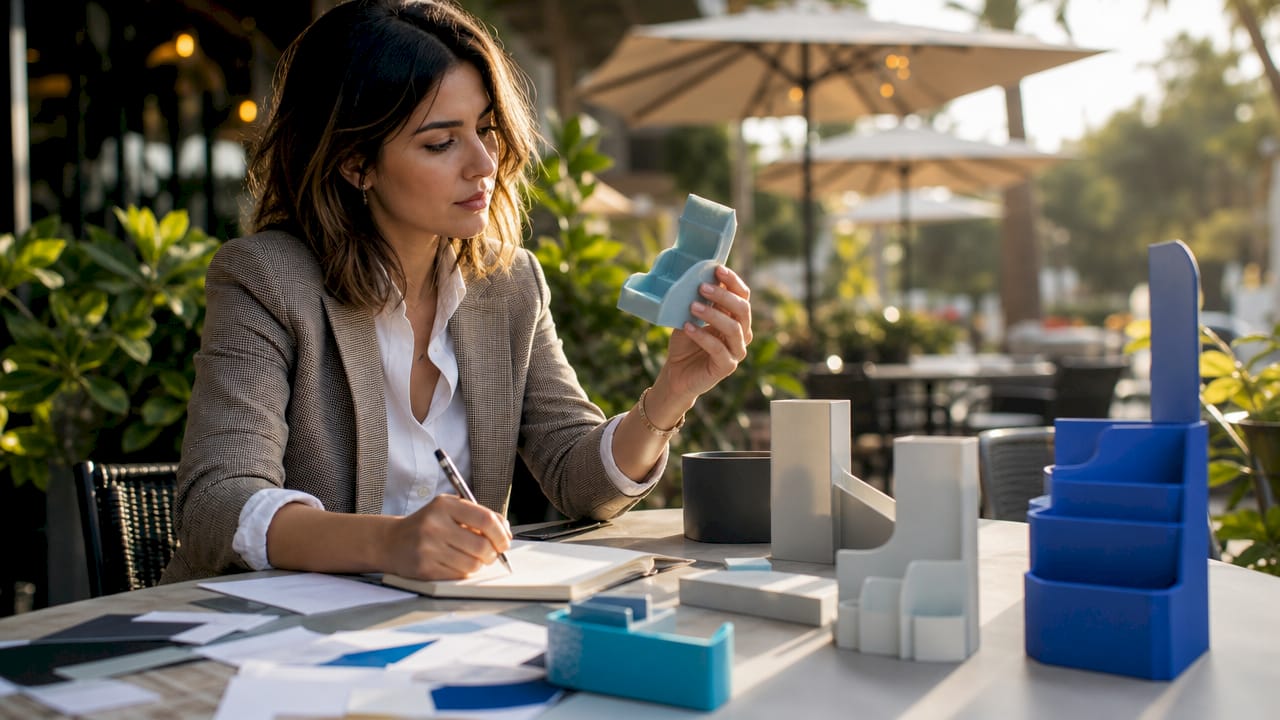
- Countertop display units. Small printed frames, risers, and product holders that sit at point-of-sale. They are fast to produce and easy to swap between product lines.
- Floor and endcap displays. Larger freestanding structures with 3D printed panels, brackets, or decorative elements. These often combine printed parts with standard retail fixtures.
- Oversized product replicas. Giant versions of bottles, boxes, or devices used as window props or trade show centerpieces. Custom 3D printed props protect high-value items from damage or theft in retail and trade show settings.
- Themed display environments. Printed architectural elements like arches, columns, or branded backdrops that turn a shelf section into an immersive brand space.
- Shelf talkers and header cards with 3D elements. Flat graphics combined with printed dimensional accents that catch the eye at shelf level.
Pro Tip: Design countertop displays with a flat base plate that is at least 20% wider than the tallest printed element. This prevents tipping without adding weight.
The real role of 3D prints in retail is not to replace every traditional fixture. It is to fill the gaps where standard manufacturing is too slow, too expensive, or too inflexible for short-run or custom needs.
2. Trade show and pre-launch marketing models with full-color printing
Full-color 3D printed models are the fastest way to put a physical product in a buyer’s hands before production starts. Pre-launch 3D models enable marketing teams to conduct studio photography and retailer sell-in months before production units exist, removing product availability bottlenecks for promotional content. That means your catalog, press kit, and retailer presentation can all be ready before the factory ships a single unit.
The advantages of this approach are concrete:
- Color fidelity. Full-color printing matches Pantone standards, so the model looks identical to the final product under retail lighting conditions.
- Scale accuracy. Models can be printed at exact product dimensions or at a chosen display scale, giving buyers a true sense of size and proportion.
- Surface finish. Post-processing techniques like sanding, priming, and clear coating produce a finish that photographs as well as the real product.
- Speed. A model that would take weeks to source from a factory can be printed and finished in days.
A 2026 industry survey shows full-color marketing models improve retailer sell-in success and shorten product launch cycles significantly. That result matters because compressed launch timelines directly reduce carrying costs and lost sales windows. For influencer outreach, printed models also give creators something physical to photograph and review, which drives more authentic content than digital renders alone.
3. Materials and durability for 3D printed retail displays
Material choice determines whether a printed display survives one trade show or three years of retail floor use. The wrong material costs more in replacements than the right material costs upfront.
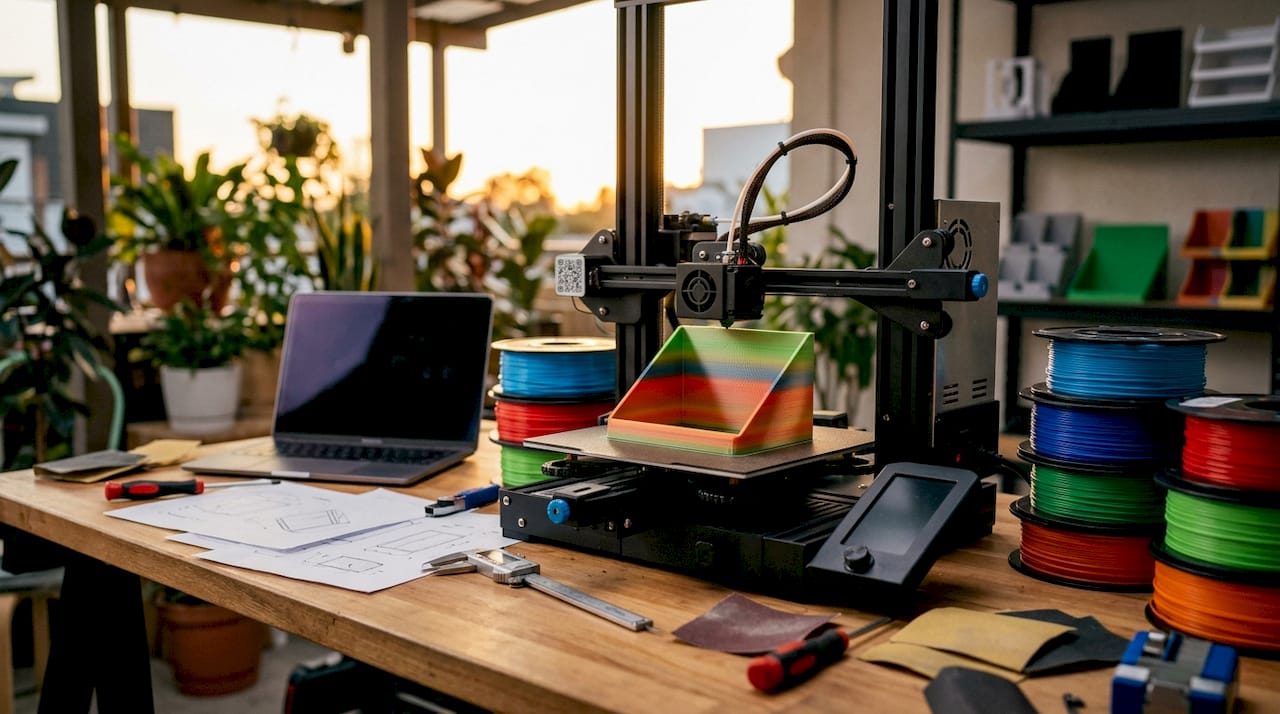
- PETG (Polyethylene Terephthalate Glycol). PETG is the standard for retail display prototypes because of its toughness, impact resistance, and crack resistance. It handles the bumps of shipping and repeated handling without becoming brittle.
- ASA (Acrylonitrile Styrene Acrylate). Best for displays near windows or outdoor retail environments. ASA resists UV degradation and holds color longer than standard ABS.
- PLA+ (Enhanced Polylactic Acid). Suitable for short-term indoor displays and trade show models where weight matters more than long-term durability.
- Fiberglass-reinforced composites. Large display props often incorporate internal fiberglass reinforcement to prevent deformation and cracking during shipping and repeated handling. This technique adds structural strength without significantly increasing visible bulk.
Pro Tip: Ask your print provider to add 40–60% infill density on any display part that will be handled by shoppers or moved between locations. Higher infill adds strength without changing the external appearance.
| Material | Best use case | Durability level | UV resistance |
|---|---|---|---|
| PETG | Long-term retail fixtures | High | Moderate |
| ASA | Window and outdoor displays | High | High |
| PLA+ | Short-term trade show props | Moderate | Low |
| Fiberglass-reinforced | Large structural props | Very high | Depends on coating |
For guidance on outdoor display materials, the selection process follows the same logic: match the material to the environment and the expected handling frequency.
4. Lighting and visual effects enabled by 3D printed retail signage
3D printing enables a range of lighting effects that flat-printed signage cannot replicate. Front-lit, halo-lit, side-lit, RGB, and infinity-mirror retail signage each produce a distinct visual result, giving brands a full spectrum of options to fit their positioning.
The choice between lighting styles is a brand decision, not just a technical one:
- Front-lit letters direct light outward toward the viewer. They deliver maximum visibility in high-traffic, brightly lit retail environments and work well for value-oriented or high-volume brands.
- Halo-lit letters project light behind the letter onto the wall, creating a soft glow around the shape. Halo-lit signs create an understated, premium aesthetic favored by upscale retailers.
- Side-lit panels illuminate from the edge, producing a clean, modern look suited to tech and lifestyle brands.
- RGB programmable signs cycle through colors or respond to triggers like time of day or promotional events. They work best in entertainment retail or experiential pop-up environments.
- Infinity-mirror effects use layered printed panels with reflective film to create a depth illusion. These are high-impact statement pieces for flagship stores or window installations.
The structural advantage of 3D printing here is direct. Printed letters can be designed with internal channels sized exactly for LED strip widths, which eliminates the hot spots and uneven glow that plague routed foam or cut acrylic alternatives. The result is a cleaner light distribution with less post-production adjustment.
5. How 3D printing accelerates prototyping and iterative display design
Rapid prototyping is the single biggest efficiency gain 3D printing delivers for retail display development. Rapid prototyping with 3D printing allows fast iteration of display parts, greatly accelerating product development cycles and reducing costs associated with molds and tooling. A design change that once required a new mold and a four-week lead time now takes an afternoon.
The practical benefits for retail marketers are specific:
- Test before committing. Print a single unit of a new countertop display and place it in a test store before ordering 500 units from a traditional manufacturer.
- Respond to buyer feedback fast. If a retailer requests a different height or a logo repositioned, the CAD file updates in hours and a revised print ships within days.
- Run parallel design options. Print two or three versions of a display simultaneously and evaluate them side by side in a real store environment.
- Reduce tooling costs to zero. No injection mold means no $10,000–$50,000 upfront tooling investment for short-run display components.
Low-volume manufacturing with 3D printing is particularly well suited to seasonal retail programs, where display designs change every quarter and volume per design rarely justifies traditional tooling. The 3D modeling process for these display components follows a structured workflow from concept sketch to print-ready file, which keeps revision cycles tight and predictable.
Key takeaways
3D printed retail displays deliver the most value when material, lighting, and prototyping decisions are made together from the start of the design process.
| Point | Details |
|---|---|
| Match material to environment | Use PETG for long-term indoor fixtures and ASA for window or outdoor displays. |
| Choose lighting by brand position | Front-lit signs maximize visibility; halo-lit signs signal a premium brand identity. |
| Use full-color models pre-launch | Printed models enable retailer sell-in and studio photography before production units exist. |
| Prototype before scaling | Print one unit to test fit, finish, and retailer feedback before committing to volume. |
| Reinforce large props internally | Fiberglass reinforcement prevents deformation in large display props during shipping and repeated use. |
Why most retail display programs underuse 3D printing
The brands that get the most from 3D printed retail displays are not the ones with the biggest budgets. They are the ones that bring 3D printing into the process earlier. Most retail marketing teams still treat 3D printing as a last-resort fix when a vendor falls through or a timeline collapses. That is the wrong frame entirely.
The real opportunity is at the front of the project. When you design a display with 3D printing in mind from day one, you get a faster approval cycle, a lower prototype cost, and a finished product that fits the retail environment precisely because you tested it there. I have seen brands spend more on one round of traditional tooling revisions than they would have spent on a full 3D printed prototype program for an entire product line.
The lighting question is where I see the most missed opportunities. Retail marketers often default to front-lit letters because they are familiar. Halo-lit and RGB options are not significantly more expensive to print, but they create a meaningfully different shopper response. The sign that makes someone stop and look is worth more than the sign that simply identifies the brand.
The future of 3D printing in retail is not about replacing all traditional display manufacturing. It is about owning the early stages of every display program, from concept model to in-store test, before any traditional vendor gets involved. That shift alone changes the economics of retail display development.
— Justin
Cc3dlabs custom retail display printing services
Cc3dlabs produces 3D printed retail display components for brands that need fast turnaround, accurate color, and parts built to survive real store conditions.
From countertop display units to large-scale trade show props, Cc3dlabs handles multi-color and multi-material printing with the material expertise to match the right filament to each application. The team also provides CAD modeling support, so you can move from a sketch or reference sample to a print-ready file without sourcing a separate design vendor. Request a free estimate through the 3D printing services page and get a quote specific to your display format, material requirements, and quantity.
FAQ
What are the main types of retail display 3D print applications?
The main types include dimensional channel letter signage, countertop display units, floor and endcap fixtures, oversized product replica props, and themed environmental elements. Each type serves a different merchandising goal and can be produced in materials matched to the display’s expected lifespan and handling conditions.
What material works best for long-term 3D printed retail displays?
PETG is the standard choice for long-term retail display use because of its impact resistance and crack resistance. For displays near windows or in outdoor retail settings, ASA offers better UV stability and color retention over time.
Can 3D printed models replace physical product samples for retailer meetings?
Full-color 3D printed models can replace physical samples for retailer sell-in meetings, studio photography, and press kits. They match Pantone color standards and can be produced months before factory production units are available.
How does 3D printing reduce retail display development costs?
3D printing eliminates tooling costs entirely for short-run display components, which removes the $10,000–$50,000 mold investment required by traditional injection molding. It also shortens revision cycles from weeks to days, reducing the total cost of design iteration.
What lighting options are available for 3D printed retail signage?
3D printed retail signage supports front-lit, halo-lit, side-lit, RGB programmable, and infinity-mirror lighting effects. The right choice depends on brand positioning, ambient store lighting, and whether the sign needs to attract attention or signal a premium identity.