
TL;DR:
- D printing’s role in retail has expanded to include product customization, store redesign, and supply chain optimization. It enables rapid prototyping, personalized products, and sustainable packaging, offering brands a competitive edge. Retailers must manage operational challenges like licensing, fulfillment, and customer expectations to fully leverage this technology.
Most retail owners think 3D printing means one thing: rapid prototyping. You get a concept, print a model, and move on. But the role of 3D prints in retail has grown far past that narrow definition. Brands are now using additive manufacturing to produce custom products, redesign store interiors, create packaging that people photograph before they even open it, and shorten supply chains in ways that would have seemed impractical five years ago. This article breaks down every major application, the real operational challenges you need to prepare for, and how to use this technology to give your customers something they cannot get anywhere else.
Table of Contents
- Key takeaways
- How 3D printing is reshaping retail product development
- 3D printed packaging and the unboxing advantage
- Store architecture and displays powered by 3D printing
- Operational challenges you need to plan for
- What the future of 3D printing in stores looks like
- My take on using 3D printing in your retail strategy
- How Cc3dlabs helps retailers move from idea to product
- FAQ
Key takeaways
| Point | Details |
|---|---|
| Beyond prototyping | The impact of 3D printing in retail spans product customization, packaging, store design, and supply chain agility. |
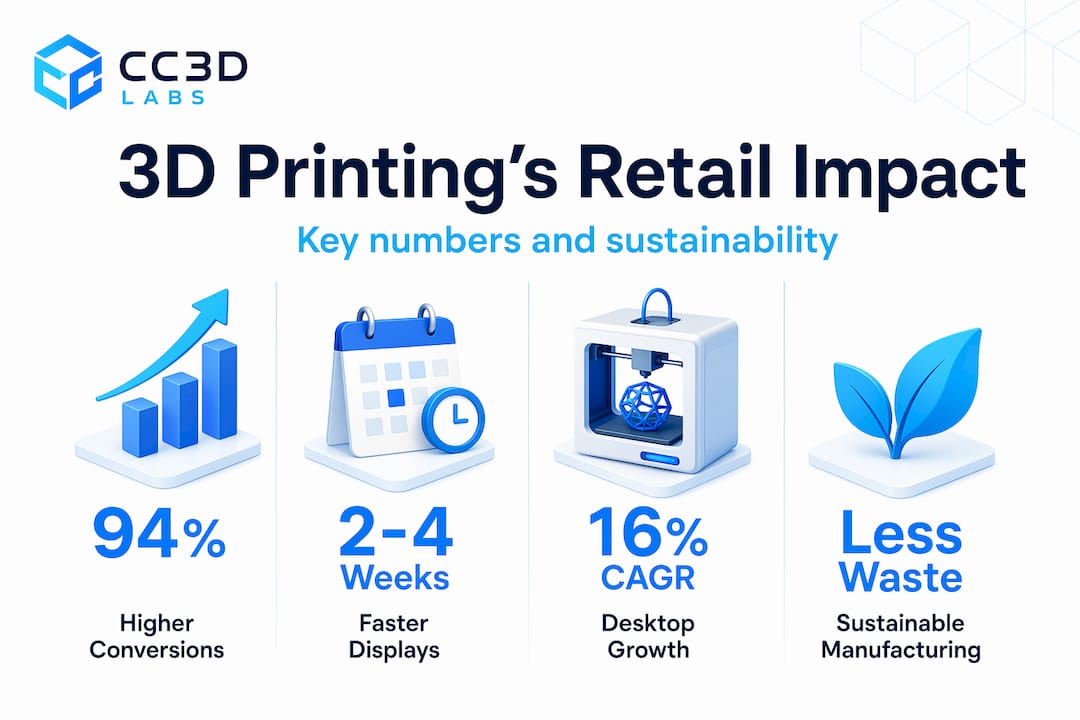
| Conversion lift | Interactive 3D product content can increase e-commerce conversions by up to 94% compared to standard 2D images. |
| Packaging as brand asset | 3D printed packaging splits into two clear markets: luxury customization and functional protective packaging, each with distinct ROI. |
| Operations demand discipline | Selling 3D prints commercially adds shipping, customer service, and legal overhead that most retailers underestimate. |
| Start with a partner | Working with an experienced 3D printing service reduces upfront risk and speeds up your first market-ready application. |
How 3D printing is reshaping retail product development
The most direct 3D printing benefits for retailers show up in product development. Traditional design cycles require tooling, mold creation, and minimum order quantities that can tie up capital for months. With additive manufacturing, you can go from a digital file to a physical product in hours, test customer reactions, and iterate without scrapping thousands of dollars of inventory.
This speed creates real competitive advantages in categories where trends move fast.
Customization as a product category
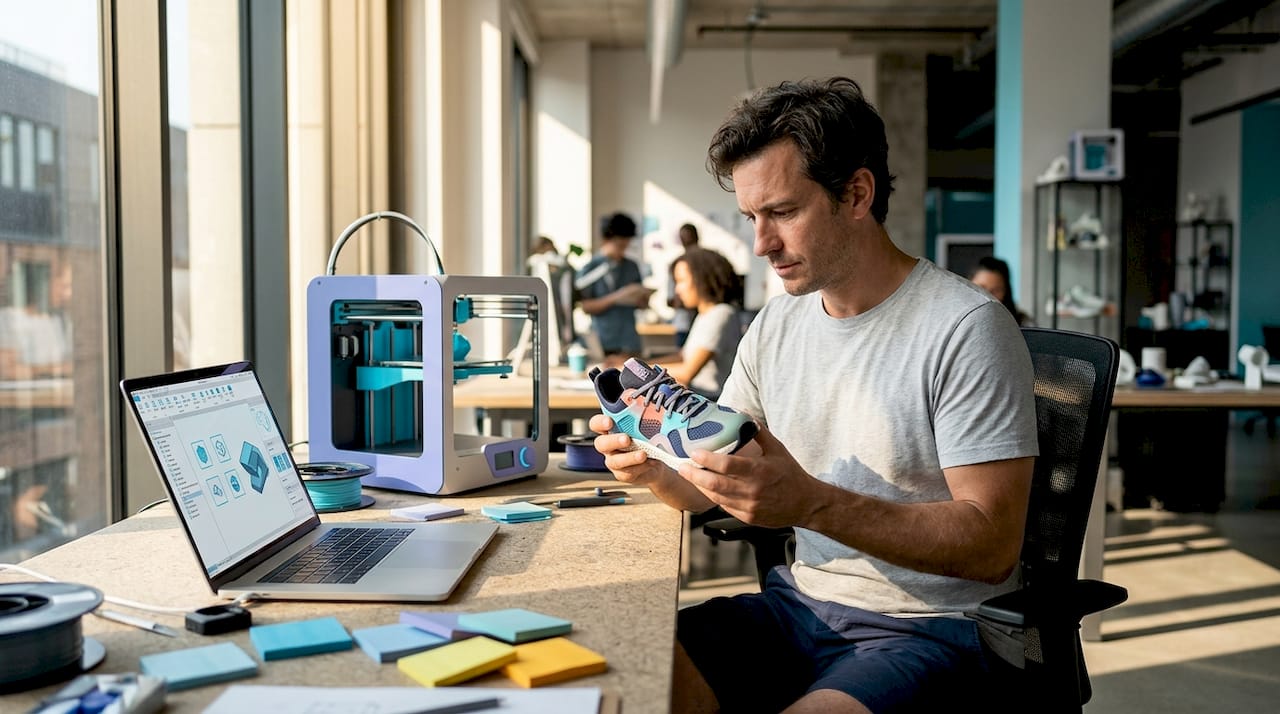
Hyper-customization is where the 3D print applications in retail get genuinely interesting. Brands in jewelry, fashion, and footwear are treating customization as the product itself, not just a feature. Syntilay’s in-store 3D scanning experience in Times Square is a clear example. Shoppers scan their feet and receive custom fit 3D printed shoes built to their exact measurements. The shoes fit better than anything off a standard shelf. That precision becomes the sales pitch.
Beyond footwear, jewelry retailers let customers choose stone placement, engravings, and band dimensions through a configuration tool, then print the piece on demand. The customer is no longer buying from a catalog. They are co-designing a product that only they will own.
On the digital side, e-commerce retailers adding interactive 3D content to product pages see conversion rates up to 94% higher than pages using standard 2D photography. Shoppers who can rotate, zoom, and inspect a product model are more confident and buy more often.
- Rapid iteration on new product concepts without tooling costs
- On-demand production of personalized goods in fashion and accessories
- Reduction of dead stock through made-to-order manufacturing
- Interactive 3D models on product pages that increase buyer confidence
- Localized product variants for different markets without retooling
Pro Tip: If you sell accessories or small goods online, even a basic 3D model embedded in your product page can measurably reduce return rates. Customers know exactly what they are getting before the package arrives.
3D printed packaging and the unboxing advantage
Packaging is one of the most underused applications when retailers start exploring how 3D prints change retail. Most conversations skip straight to product. But your packaging is the first physical touchpoint a customer has with your brand, and 3D printing gives you design freedom that injection molding simply cannot match at low volumes.
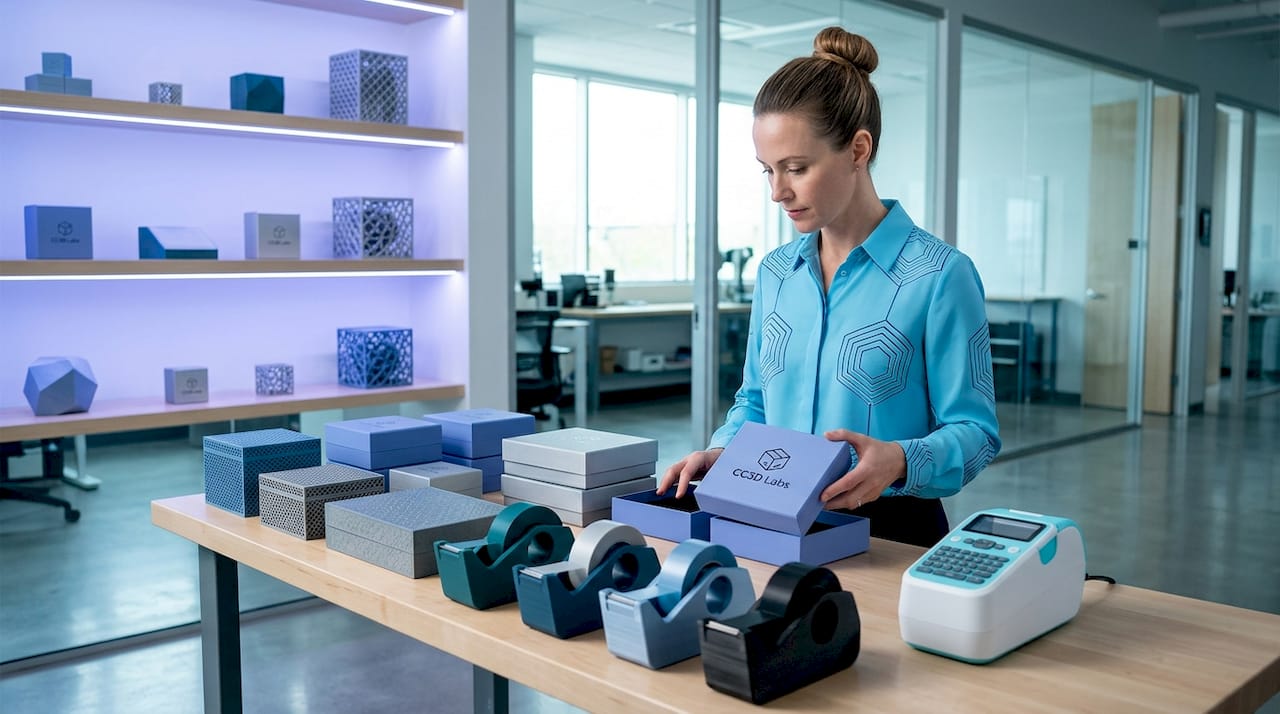
The 3D printed packaging market breaks clearly into two segments, and understanding which one fits your business matters before you invest.
| Packaging segment | Best fit | Core benefit |
|---|---|---|
| Luxury customization | Cosmetics, jewelry, premium DTC brands | Creates memorable unboxing moments and signals brand quality |
| Functional protective packaging | Electronics, fragile goods, industrial products | Reduces damage rates with precise geometric fits |
| On-demand production | E-commerce, subscription boxes | Eliminates overstock and supports small-batch product launches |
The sustainability angle is real too. Additive manufacturing reduces material waste by building up material layer by layer rather than cutting it away. And recycled filaments made from post-consumer plastics are available now, not in some future roadmap.
Cosmetics brands have been early movers here. A small-batch fragrance company, for example, can print a run of 200 custom cap designs for a seasonal launch without committing to a 10,000-unit mold. That flexibility protects cash flow and lets you test market response before scaling.
Pro Tip: For DTC brands, your packaging is a social media asset. A 3D printed box with a textured logo or geometric form gets photographed and shared. Design for the unboxing video, not just for protection.
Store architecture and displays powered by 3D printing
Retail 3D printing trends in 2026 include something most owners have not considered: printing the store itself. Large-format 3D printing now makes it practical to produce custom architectural elements, ceiling panels, display fixtures, and wall structures at a scale that changes the entire feel of a retail environment.
Lululemon’s collaboration with Aectual is the most cited example in the industry. The brand used large-format 3D printed panels made from recycled consumer waste for store ceiling and display installations. The result checks three boxes at once: it reinforces their sustainability brand message, creates a store environment that feels genuinely distinctive, and uses modular components that can be reconfigured or moved to a new location.
| Feature | Traditional fixtures | 3D printed fixtures |
|---|---|---|
| Lead time | 8 to 14 weeks | 2 to 4 weeks |
| Minimum order | Often 50+ units | Single unit possible |
| Custom geometry | Limited by tooling | Unlimited design freedom |
| Sustainability | Standard materials | Recycled filaments available |
| Reusability | Low modularity | Modular and reconfigurable |
For 3D printing for product displays specifically, this means you can build fixture systems that match your visual identity exactly instead of buying generic shelving and adding branding as an afterthought. You can explore custom retail display applications to see what this looks like in practice.
Operational challenges you need to plan for
The benefits are real, but the impact of 3D printing in retail also comes with friction that catches retailers off guard. Understanding these challenges before you launch a program protects your margins and your reputation.
The Syntilay example captures one tension clearly. In-store 3D scanning for custom footwear improves product fit, but retailers must manage the visible friction of delayed fulfillment. A customer who scans their foot in your store and waits two weeks for a shoe has a fundamentally different experience than a customer who walks out with a product. You need to build customer education and expectation management into the process itself, not treat them as afterthoughts.
Commercialization also changes your operation in ways that creative enthusiasm tends to obscure. Selling 3D prints professionally adds shipping logistics, customer service workflows, quality control, and returns management. Each of these requires systems and time that can crowd out the creative work that made the idea appealing in the first place.
Legal exposure is a real risk. Owning a 3D model file does not give you commercial licensing rights to sell products made from it. Designers license files with specific use conditions, and selling printed products from a personal-use file is an infringement. This matters most for retailers sourcing designs from third-party libraries.
- Audit every 3D model file for its licensing terms before selling a single unit
- Build fulfillment time into the customer experience by framing it as a feature, not a wait
- Systematize order tracking and customer communication from day one
- Test quality control processes on small batches before scaling
- Consider a low-volume manufacturing approach to validate demand before committing to larger runs
Pro Tip: Transparency about production time actually builds trust when you frame it correctly. “Your item is being made specifically for you” lands very differently than “Your order is delayed.” The product is the same. The customer’s feeling is not.
What the future of 3D printing in stores looks like
The future of 3D printing in stores is moving in two directions simultaneously, and both matter for how you plan your investments.
- Industrial scale will dominate production. The industrial 3D printing segment holds 82.40% of the market, and that dominance will continue for retailers needing batch production and structural precision.
- Desktop 3D printing is growing fast. Desktop units are expanding at a 16.40% CAGR through 2035, meaning affordable, in-store printing capabilities are becoming viable for smaller retailers.
- Augmented reality integration is accelerating. Customers will configure products in AR and send specifications directly to a print queue. The gap between “I want this” and “I have this” will keep shrinking.
- On-demand localized production will reshape logistics. Producing closer to customers shortens supply lines and lets retailers respond to regional demand patterns without holding centralized inventory.
- Sustainability credentials will become a differentiator. Brands using recycled filaments and on-demand production to reduce waste will carry a marketing advantage as customers pay closer attention to how products are made.
You can dig deeper into where technology is heading with 3D printing trends for 2026 to make more informed investment decisions.
My take on using 3D printing in your retail strategy
I’ve seen retailers approach 3D printing one of two ways. The first group treats it as a novelty. They print a few display pieces, show them off at a trade show, and then never operationalize the capability. The second group starts small but builds systems around the technology. That second group tends to win.
What I’ve learned working with retail clients is that the operational side trips people up more than the technology does. The printing itself is not the hard part. Managing customer expectations, securing proper licenses for digital files, and building repeatable fulfillment processes are where most early programs stall.
My honest advice: start with one application, run it as a real business operation from day one, and resist the urge to expand before you’ve worked out the unit economics. A single custom product line with clean fulfillment and happy customers will teach you more than five experimental projects that never fully launch.
The retailers who move early and build disciplined operations around this technology will have an advantage that is genuinely hard to replicate. The ones who treat it as a side experiment will eventually wonder why it never delivered.
— Justin
How Cc3dlabs helps retailers move from idea to product
If you’ve read this far, you know the opportunity is real and so is the complexity. Cc3dlabs works with retail businesses at exactly the point where ideas need to become physical products. Their custom 3D printing and scanning services near Philadelphia cover everything from single prototypes to batch production runs, with multi-color printing, CAD modeling, and quality control built into every project.
For retail applications specifically, the ability to get prototypes and custom parts on demand without minimum order commitments is the kind of flexibility that makes early-stage product development financially practical. Whether you’re testing a custom packaging concept or building a product line around personalized goods, Cc3dlabs brings the technical depth and turnaround speed that retail timelines require. Explore their full 3D printing services to see where your next retail application could start.
FAQ
What is the main role of 3D prints in retail?
The role of 3D prints in retail spans product customization, packaging design, in-store displays, and on-demand manufacturing. It gives retailers a way to offer personalized products and distinctive brand experiences without the high costs of traditional tooling.
How does 3D printing affect retail conversion rates?
Interactive 3D product content on e-commerce pages can increase conversion rates by up to 94% compared to standard 2D images. Shoppers who can interact with a product model buy with more confidence and return products less often.
What are the biggest legal risks of selling 3D printed products?
Owning a 3D model file does not automatically grant commercial rights to sell products printed from it. Retailers must secure explicit commercial licenses for every design file used in a product sold to customers.
Can small retailers realistically use 3D printing?
Yes. Desktop 3D printing is growing at 16.40% CAGR and becoming more accessible. Small retailers can start with a single application, such as custom packaging or personalized accessories, and scale once they have validated demand and built operational systems.
How does 3D printing support retail sustainability goals?
Additive manufacturing builds products layer by layer, which reduces material waste compared to subtractive processes. Retailers can also use recycled filaments and produce only what customers order, eliminating overstock waste entirely.