
TL;DR:
- Digital fabrication involves computer-controlled machines transforming digital designs into physical objects with minimal human intervention. It encompasses various methods like 3D printing, CNC milling, and laser cutting, based on a CAD to CAM workflow. Its main benefits are precision, speed, and customization, but it requires skill and investment for effective use.
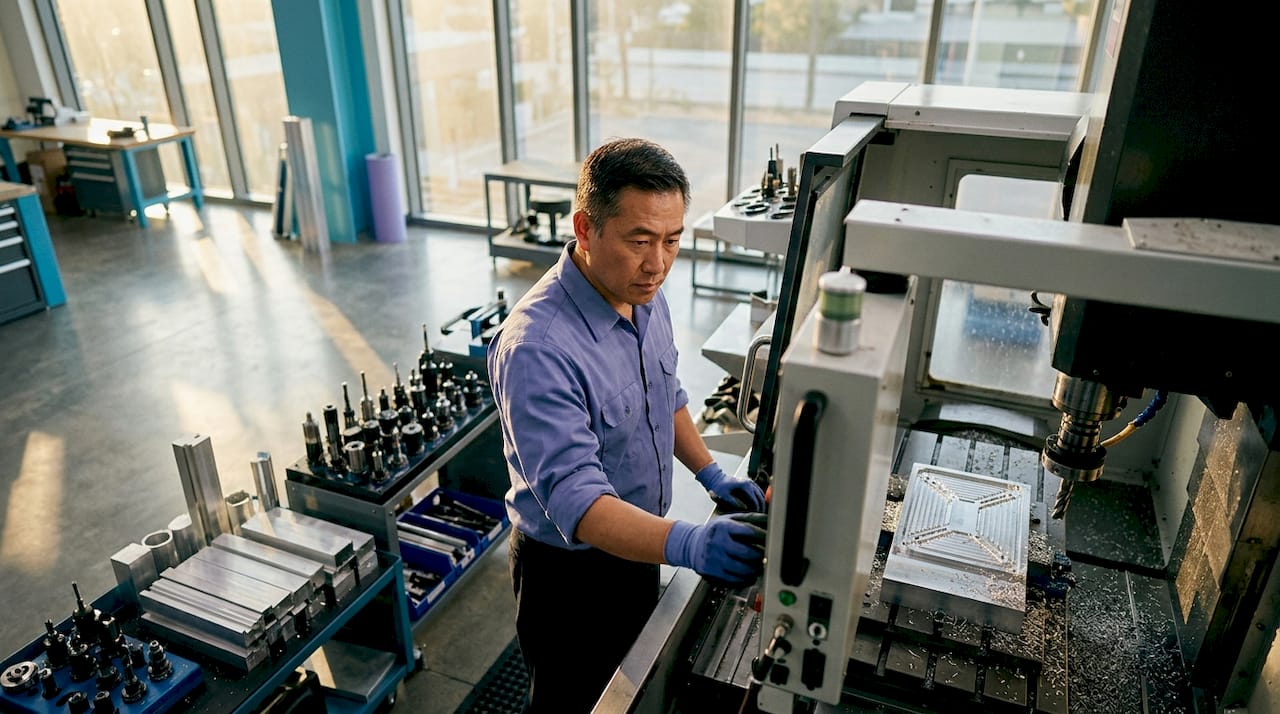
Digital fabrication is defined as the process of using computer-controlled machines to transform digital design files into physical objects, with minimal human intervention at the production stage. The field originated in the 1950s and has since become a core skill in architecture, engineering, product development, and artistic design. Understanding what is digital fabrication means recognizing that it covers far more than 3D printing. It spans CNC milling, laser cutting, water jet cutting, and forming processes, all driven by the same fundamental workflow: a digital file controls the machine, and the machine builds the part.
What is digital fabrication and how does it work?
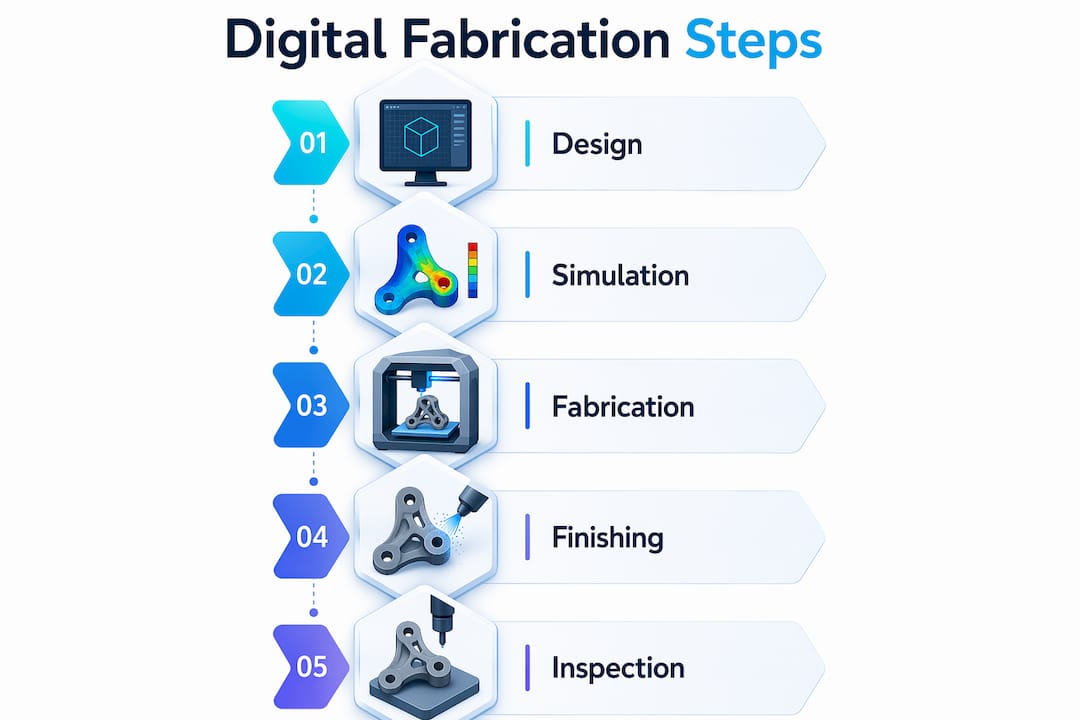
Digital fabrication technology operates through a two-stage workflow: CAD to CAM. CAD, or computer-aided design, is where you create the digital model. CAM, or computer-aided manufacturing, translates that model into machine-readable instructions called G-code or toolpaths. The machine then executes those instructions with a level of repeatability no human hand can match.
The CAD to CAM workflow is the foundation of every digital fabrication process. Once a design is finalized in software like Autodesk Fusion 360 or SolidWorks, the CAM software calculates the exact movements the machine must make. That file goes directly to the machine, which executes the build automatically.
The main machine types in a digital fabrication ecosystem include:
- 3D printers (FDM, SLA, SLS): build objects layer by layer from plastic, resin, or powder
- CNC mills: remove material from a solid block using rotating cutting tools
- Laser cutters: use a focused beam to cut or engrave sheet materials like wood, acrylic, or metal
- Vinyl cutters: trace vector paths to cut adhesive films or thin sheets
- Water jet cutters: use high-pressure water mixed with abrasive to cut thick metals and composites
The key distinction between digital and analog fabrication is control. In analog fabrication, a human guides the tool, even when using jigs or templates. In digital fabrication, precise digital instructions control every movement. That shift eliminates a major source of human error and makes production far more consistent.
Pro Tip: Before sending any file to a machine, run a simulation in your CAM software. Catching a toolpath collision on screen costs nothing. Catching it on the machine costs material, time, and sometimes the tool itself.
What are the main types of digital fabrication methods?
Digital fabrication processes fall into three categories: additive, subtractive, and formative manufacturing. Each category uses distinct machines, suits different materials, and produces different results. Choosing the wrong category for a project wastes time and money.
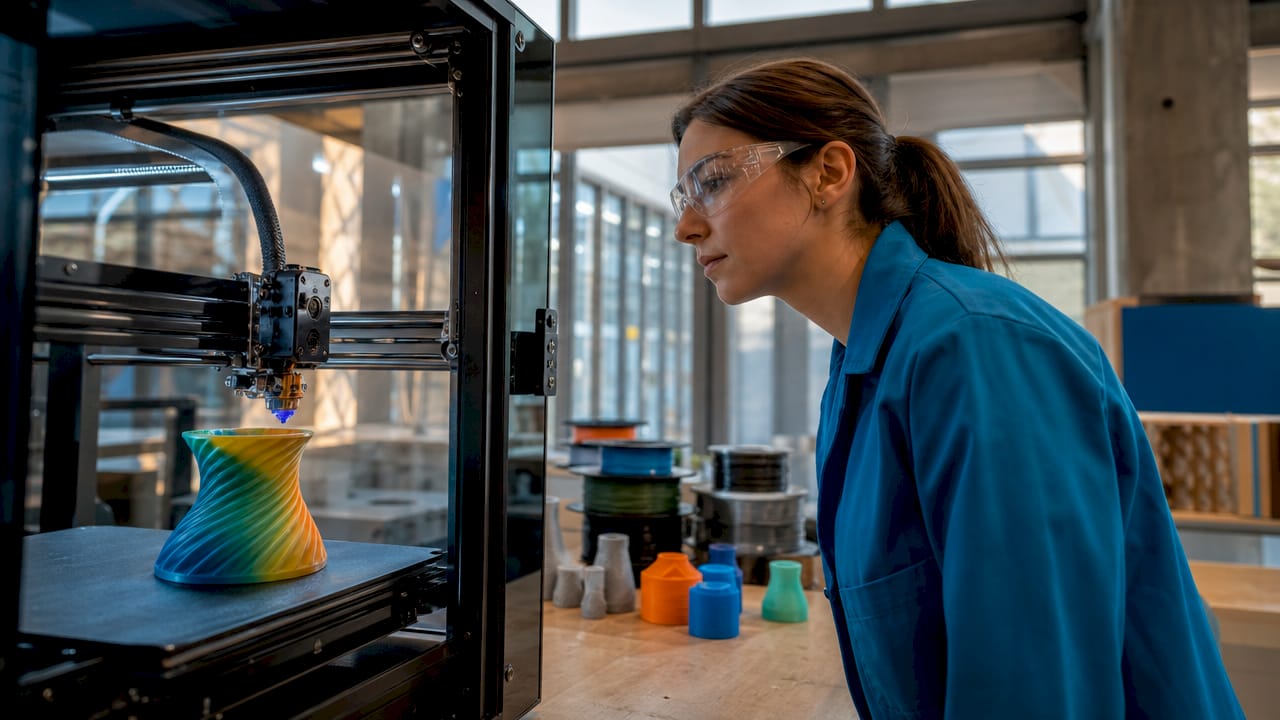
Additive manufacturing builds objects by depositing material layer by layer. 3D printing is the most common example. It excels at complex internal geometries, lightweight structures, and low-volume custom parts. Material waste is minimal because you only deposit what the part requires.
Subtractive manufacturing starts with a solid block and removes material until the part remains. CNC milling and laser cutting are the primary tools. Subtractive methods produce parts with tighter tolerances and better surface finishes than most additive processes. They work well with metals, hardwoods, and engineering-grade plastics.
Formative manufacturing uses digital control to shape, bend, fold, or mold material without adding or removing it. Processes like CNC bending, thermoforming, and press braking fall here. Formative methods are fast for high-volume production and work well with sheet metal and thermoplastics.
| Method | Key advantage | Main limitation | Typical materials | Best for |
|---|---|---|---|---|
| Additive | Complex geometry, low waste | Slower, lower strength | Plastics, resins, metals | Prototypes, custom parts |
| Subtractive | Tight tolerances, strong parts | More material waste | Metals, wood, plastics | Functional components |
| Formative | Fast at volume, consistent | High tooling cost | Sheet metal, thermoplastics | Production runs |
Pro Tip: For most prototyping projects, start with additive manufacturing to validate geometry, then switch to subtractive or formative methods for the production version. This sequence saves significant tooling cost.
What are the main applications of digital fabrication?
Digital fabrication technology serves four major application areas, each with distinct requirements and benefits.
-
Rapid prototyping. Designers and engineers use digital fabrication to validate concepts quickly without committing to expensive tooling. A part that once took weeks to produce by hand can now be printed overnight and tested the next morning. The ability to iterate fast is the single biggest competitive advantage digital fabrication gives product developers.
-
Precision manufacturing. CNC milling and laser cutting produce parts to tolerances measured in thousandths of an inch. Aerospace brackets, medical device housings, and automotive jigs all rely on subtractive digital fabrication for this level of accuracy. The automated precision of these processes reduces human error and minimizes material waste compared to traditional manual methods.
-
Architectural and artistic design. Architects use digital fabrication to produce building components with complex geometries that would be impossible to create by hand. Parametric facades, custom joinery, and scale models all come out of the same CAD to CAM pipeline. Artists use laser cutters and CNC routers to create intricate sculptures and installations that require machine-level precision.
-
Education and makerspaces. Schools and community fabrication labs use digital fabrication tools to teach design thinking, engineering, and problem-solving. Students move from a sketch to a physical object in a single session. That near-instant feedback loop accelerates learning in a way that traditional shop class never could.
The integration of design and fabrication into a nearly simultaneous process is what makes digital fabrication so powerful across all four areas. You design it, you make it, you test it, and you improve it. That cycle used to take months. Now it takes days or hours.
Cc3dlabs applies this same workflow to custom 3D printing for engineers and product developers near Philadelphia, producing functional prototypes and batch parts with fast turnaround times.
What are the benefits and challenges of digital fabrication?
The benefits of digital fabrication are concrete and measurable. The challenges are real but manageable with the right preparation.
Core benefits:
- Precision: Machines execute digital instructions exactly, producing consistent results across every unit in a batch
- Waste reduction: Additive processes use only the material the part requires; subtractive processes recycle chips and offcuts
- Speed: The iterative feedback loop between design and fabrication compresses development timelines
- Customization: Every part can be unique without retooling, because the design file is the only thing that changes
- Reduced human error: Digital control eliminates the variability introduced by manual tool guidance
Common challenges:
- Upfront cost: Professional CNC machines and industrial 3D printers carry significant purchase and maintenance costs
- Skill requirements: Operating CAD and CAM software requires training. A poorly prepared file produces a poorly made part
- Material constraints: Not every material works with every process. Matching material to method requires experience
- Software learning curve: CAD platforms like Fusion 360 and SolidWorks take months to learn at a production level
The comprehensive digital fabrication ecosystem including CNC milling, laser cutting, and forming processes requires unified CAD/CAM workflows to function efficiently. Teams that invest in workflow standardization recover their setup costs faster than those who treat each machine as a separate silo.
Pro Tip: Build a material and process matrix before starting any new project. List your geometry requirements, tolerance needs, and volume, then match them to the right fabrication method. Skipping this step is the most common reason projects go over budget.
Key Takeaways
Digital fabrication is the most direct path from a digital design to a physical object, and choosing the right process category determines whether a project succeeds or fails.
| Point | Details |
|---|---|
| CAD to CAM is the core workflow | Every digital fabrication process starts with a design file and ends with machine-readable instructions. |
| Three categories cover all methods | Additive, subtractive, and formative manufacturing each suit different materials, tolerances, and volumes. |
| Precision and speed are the top benefits | Digital control eliminates human error and compresses design-to-part timelines significantly. |
| Prototyping drives the most value | Rapid iteration using digital fabrication cuts development time and reduces tooling costs before production. |
| Skill and cost are the main barriers | CAD/CAM proficiency and equipment investment are the two factors that determine adoption speed. |
Why the “3D printing equals digital fabrication” myth costs engineers time
The most persistent misconception I see among engineers new to this field is treating digital fabrication and 3D printing as synonyms. They are not. 3D printing is one tool in a much larger toolkit, and defaulting to it for every project leads to parts that are weaker, slower to produce, or more expensive than they need to be.
I have watched product teams spend weeks iterating on FDM-printed structural brackets, only to discover that a CNC-milled aluminum version would have passed load testing on the first attempt. The additive process was the wrong choice for that geometry and that material. The team knew how to use a 3D printer. They did not know when not to use one.
The real skill in digital fabrication is process selection. That means understanding the additive manufacturing category deeply enough to know its limits, and knowing when subtractive or formative methods will produce a better outcome. It also means building an iterative feedback loop into every project. Practitioners who use simulations and physical mock-ups to test assumptions before committing to final production consistently produce better parts at lower cost.
The future of this field belongs to engineers and creators who treat digital fabrication as a system, not a single machine. The tools will keep improving. The workflow discipline is what separates good outcomes from great ones.
— Justin
Cc3dlabs: professional digital fabrication for your next project
Cc3dlabs brings professional-grade digital fabrication to engineers, product developers, and creators near Philadelphia and beyond. The team specializes in custom filament-based 3D printing, multi-color printing, CAD modeling, and professional handheld 3D scanning (accuracy to ~0.1 mm), all built around the same CAD to CAM workflow this article covers.
Whether you need a single functional prototype or a batch of precision parts, Cc3dlabs delivers accurate results with fast turnaround times. The process starts with your design file or a free consultation if you need modeling support. Explore the full range of 3D printing services to find the right solution for your project, or check out what is possible with 3D printing for product innovation before you commit to a fabrication method.
FAQ
What is digital fabrication in simple terms?
Digital fabrication is the process of using computer-controlled machines to build physical objects directly from digital design files. The machine reads the file and executes the build automatically, with minimal human intervention.
How does digital fabrication differ from traditional manufacturing?
Traditional manufacturing relies on manual tool guidance, even when jigs are used. Digital fabrication uses precise digital instructions to control every machine movement, which eliminates human variability and produces consistent results across every part.
What are the three main types of digital fabrication?
The three categories are additive manufacturing, which builds objects layer by layer; subtractive manufacturing, which removes material from a solid block; and formative manufacturing, which uses digital control to shape or mold material without adding or removing it.
Is 3D printing the same as digital fabrication?
No. Digital fabrication is a broad field that includes 3D printing, CNC milling, laser cutting, water jet cutting, and forming processes. 3D printing is one method within that larger category.
What industries use digital fabrication most?
Architecture, aerospace, automotive, medical device manufacturing, product design, and education all rely heavily on digital fabrication for prototyping, precision parts, and complex geometry production.