
TL;DR:
- D printed home decor offers personalized, intricate objects that combine form and function, improving interior aesthetics. Planters, vases, and wall art showcase how custom textures and styles elevate modern living spaces. Design choices in material, color, and size influence the decor’s visual impact and harmony with home interiors.
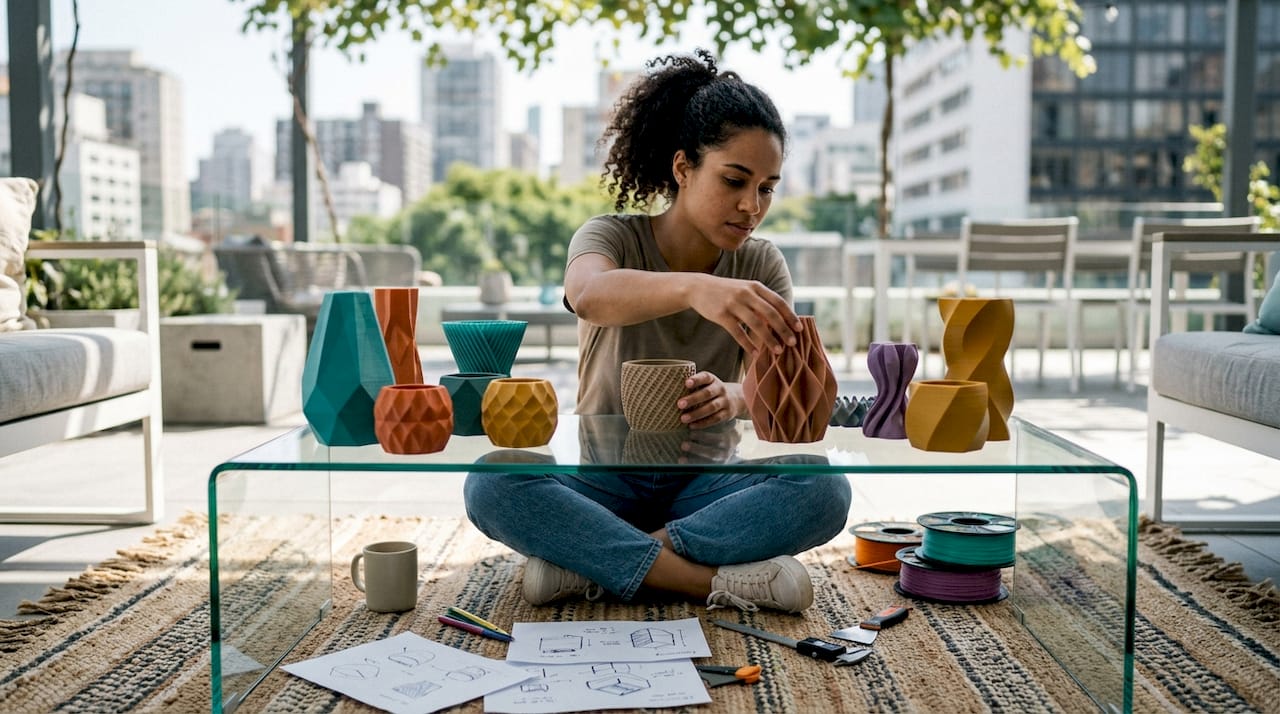
3D printed home decor is defined as decorative and functional objects produced layer by layer using filament-based or resin-based additive manufacturing, then placed in living spaces as design elements. The category spans over 50 item types, with planters, vases, and wall art leading in popularity. What makes these pieces genuinely different from store-bought decor is total control over shape, size, color, and texture. Whether you print at home or work with a professional service like Cc3dlabs, the results can match or exceed the visual quality of handcrafted pottery or cast resin. This article walks through the best examples of 3D printed home decor, with material picks and print tips for each.
1. What are popular examples of 3D printed planters and vases?
Planters and vases are the most printed home decor category for good reason. They combine visual impact with genuine utility, and 3D printing lets you dial in textures that injection molding simply cannot replicate.
Blooming Boho Cactus Vase
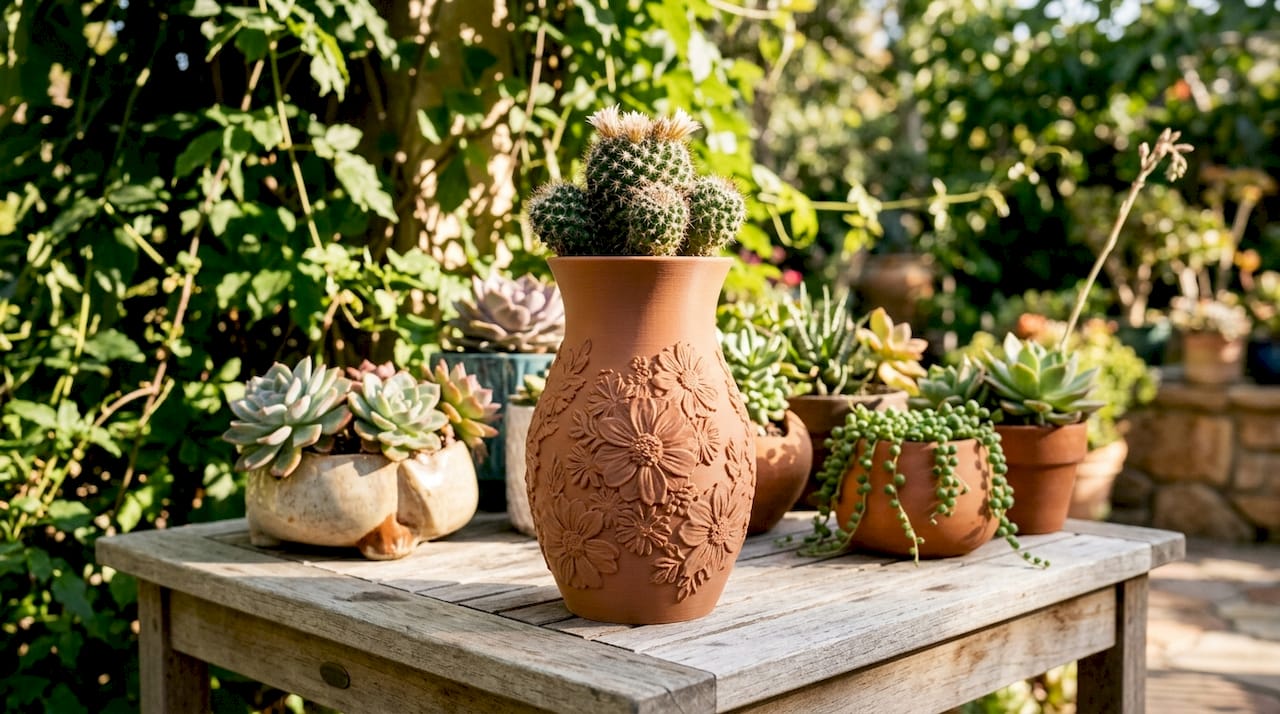
The Blooming Boho Cactus Vase mimics handcrafted clay with intricate floral surface texture. It works equally well holding dry florals, succulents, or as a standalone centerpiece. Printing it in terracotta-colored matte PLA or resin captures the organic warmth of fired pottery without a kiln. The fine surface detail rewards a 0.2mm layer height setting.
Tulipian Planter
The Tulipian Planter uses a modern diamond cage structure that creates dramatic light and shadow patterns across its surface. That open lattice also makes it lightweight while keeping it structurally sound. It doubles as a storage jar, which makes it practical beyond its visual appeal. The design fits Scandinavian and industrial interiors particularly well.
Easter Island Moai Planter
The Easter Island Moai Planter reproduces the stone texture of the original Rapa Nui statues at roughly 158×200×212 mm. It is optimized for support-free printing on FDM machines, which means no cleanup headaches. PLA or PETG both work well, and the hollow interior fits small succulents perfectly. This piece reads as sculpture first and planter second, which is exactly the kind of dual purpose that makes 3D printed decor worth the effort.
Pro Tip: Print planters without drainage holes first, then drill them by hand after printing. This gives you cleaner hole placement than relying on the slicer to generate support structures inside the base.
The 15–20% infill range is the standard for decorative items like these. It provides enough structural integrity to hold soil and moisture without wasting material or adding unnecessary weight.
2. How can 3D printed wall art add unique personalization and style?
Wall art is where 3D printing separates itself most clearly from traditional decor. Depth, texture, and custom lettering are all achievable without woodworking tools or a ceramics studio.
The most popular styles include:
- Geometric relief panels with repeating hexagonal or Voronoi patterns that cast shadows as light shifts through the day
- Custom name plates with raised lettering in any font, sized to fit any wall space
- Personalized key racks that combine a decorative header with integrated hooks below
- Modular wall tiles that interlock to form larger compositions
Personalized Name Key Holders are a standout example of functional wall art. They use 0.20mm layer height and 15–20% infill, which keeps them light enough for standard drywall anchors while strong enough to hold keys, lanyards, and small bags daily. The customizable lettering means every piece is unique to the household.
“Functional accents and personalized wall art are what truly elevate a living space. A piece that does something, holds keys, displays a name, organizes a wall, earns its place in a room in a way that a purely decorative object never quite does.”
Precision Pulse Studio
Experts at Precision Pulse Studio consistently point to this blend of utility and design as the defining quality of decor that lasts in a home rather than ending up in a drawer. For DIYers, the practical lesson is to design or select wall art pieces that solve a small problem while looking good doing it. You can read more about how this creative shift is happening across the art world in Cc3dlabs’ coverage of 3D printing and creative expression.
If you want to go beyond standard prints, custom wall art options in 2026 show how layered textures and mixed materials are pushing the category forward.
3. What are creative 3D printed accessories and functional decor items?
Functional 3D printed home accessories are the category most underestimated by first-time makers. These are the pieces that guests notice without knowing why the room feels so considered.
Popular examples include:
- Decorative paper towel holders with flower or geometric accents at the base and crown
- Modular cable organizers shaped like architectural elements
- Floating shelf brackets with ornamental cutouts
- Desk organizers styled as miniature buildings or abstract sculptures
The paper towel holder with decorative accents is a beginner-friendly print with a stable cylindrical base and optional floral crown. It belongs in kitchens and coffee corners where small design details matter most. The print requires no supports and finishes in a few hours on most desktop FDM printers.
Pro Tip: For functional accessories that get daily use, increase infill to 25–30% at stress points like the base and mounting holes. You can set variable infill in most slicers without reprinting the entire object at higher density.
Print orientation matters more for accessories than for purely decorative pieces. Standing a paper towel holder upright during printing builds vertical strength along the axis that takes the most load. Laying it on its side speeds up the print but weakens the structure where it counts. Understanding infill patterns and strength before you slice saves you from a reprint after the first week of use.
4. How to match 3D printed decor styles with home interiors?
Matching your printed pieces to your interior style is a material and color decision as much as a design one. The right filament color and finish can make a printed object look like it belongs in a curated room rather than a maker’s workshop.
- Minimalist interiors pair best with matte white, light gray, or concrete-look PLA. Clean geometric forms with no surface texture keep the visual weight low. The Easter Island Moai Planter in gray PETG reads as a deliberate sculptural choice in this context.
- Bohemian interiors welcome terracotta, earthy brown, and warm cream filaments. Textured surfaces like the Blooming Boho Cactus Vase reinforce the handmade aesthetic that defines this style. Layer height at 0.2mm preserves the surface detail that makes these pieces feel artisanal.
- Scandinavian interiors favor natural wood-fill PLA or white matte finishes. The Tulipian Planter’s open lattice structure fits this style perfectly because it is airy and geometric without being cold.
- Industrial interiors accept darker tones: charcoal, matte black, and metallic-look filaments. Wall art with exposed geometric structure, like Voronoi panels, reinforces the raw material aesthetic of exposed brick and steel.
- Eclectic interiors give you the most freedom. Mix finishes deliberately: a matte terracotta vase next to a glossy white geometric relief creates intentional contrast rather than visual noise.
Scale matters as much as color. A single large statement piece, a Moai planter at full size, reads better than three small mismatched prints clustered together. Place pieces where natural light hits textured surfaces at an angle to maximize the shadow play that makes 3D printed decor visually interesting throughout the day. For deeper guidance on designing prints that balance form and function, Cc3dlabs covers the core principles in detail.
Key Takeaways
3D printed home decor delivers the most value when material choice, infill settings, and interior style alignment are treated as a single design decision rather than three separate steps.
| Point | Details |
|---|---|
| Planters lead the category | Vases and planters offer the best combination of visual impact and practical use for first prints. |
| 15–20% infill is the standard | This range provides enough strength for daily-use decor while keeping material costs low. |
| Material finish drives style fit | Matte terracotta suits bohemian rooms; wood-fill PLA fits Scandinavian; concrete gray fits minimalist. |
| Functional art outperforms pure decoration | Pieces that solve a problem, like key racks and paper towel holders, earn permanent placement in a room. |
| 0.2mm layer height preserves surface detail | This setting captures fine textures on vases and wall art without excessive print time. |
Why I think most people underestimate the design side of 3D printed decor
Most conversations about 3D printed home decor focus on the printer and the filament. That is the wrong starting point. The printer is just the tool. The real work is in understanding what a room needs and then choosing or designing a piece that fills that need without announcing itself as a technology project.
The best 3D printed decor pieces I have seen do not look 3D printed. They look intentional. A terracotta-finish vase with a boho texture reads as a pottery find. A concrete-gray geometric wall panel reads as a design studio purchase. The technology is invisible, and that is the goal.
The practical lesson is to start with your room, not with a model file. Identify one surface or wall that feels unresolved. Then find or design a piece that addresses that specific gap in scale, color, and function. Printing something because it looks impressive on a model-sharing site and then trying to fit it into your home is how you end up with a shelf full of objects that have no relationship to each other.
Material selection is where most DIYers leave value on the table. Matte filaments almost always read as more intentional than glossy ones in home settings. Wood-fill and metal-fill PLA add tactile richness that standard PLA cannot match. The extra cost per spool is small compared to the difference in how the finished piece reads in a room. If you want to go further with personalized decor ideas, the same design principles apply whether you are making something for your own home or as a gift.
— Justin
Cc3dlabs brings your custom decor ideas to life
Designing a piece you love is one thing. Getting it printed with the material quality and surface detail it deserves is another.
Cc3dlabs, based near Philadelphia, specializes in custom filament-based 3D printing for exactly this kind of project. Whether you need a single statement planter in terracotta-finish PLA or a set of personalized wall art pieces in multi-color, the team handles material selection, print settings, and quality control so you get a finished piece worth displaying. You can request a free estimate and review the full range of custom 3D printing services directly on the Cc3dlabs website. Local pickup and shipping are both available, and the project gallery shows the level of detail you can expect.
FAQ
What materials work best for 3D printed home decor?
Matte PLA is the most common choice for decorative pieces because it produces a clean, non-reflective finish that reads as intentional in most interior styles. PETG works well for planters that will hold moisture, since it resists warping better than standard PLA.
What infill percentage should I use for decorative prints?
The standard for decorative home items is 15–20% infill. This provides enough structural strength for display and light-use items while keeping print times and material costs reasonable.
Can I print planters that hold real plants?
Yes. Print the planter in PETG for moisture resistance, or coat the interior of a PLA planter with a waterproof sealant. Drilling a drainage hole after printing gives cleaner results than generating one in the slicer.
How do I get fine surface texture on vases and wall art?
Use a 0.2mm layer height and a matte or resin filament. Finer layer heights increase print time significantly but are worth it for pieces where surface texture is the main design feature.
What are the easiest 3D printed home decor items for beginners?
Paper towel holders, simple geometric vases, and flat wall art panels are the most beginner-friendly options. They require no supports, print in a few hours, and deliver visible results that make the learning curve feel worthwhile.