
TL;DR:
- Custom wedding 3D prints offer personalized, functional objects like cake toppers, centerpieces, and keepsakes that enhance wedding decor. Using AI and professional services, couples can create detailed, durable items at a lower cost and within short timeframes, ensuring meaningful personalization. Strategic planning and choosing appropriate printing methods—resin for detail and FDM for larger decor—maximize value and long-term relevance of these customized pieces.
Custom wedding 3D prints are personalized three-dimensional objects designed and produced specifically for weddings, covering everything from cake toppers to centerpieces and keepsake gifts. The industry term for these objects is “custom additive manufacturing for events,” though most couples and vendors simply call them personalized wedding 3D prints. Tools like Sloyd AI now generate printable STL files from photos in seconds, and platforms like Cults3D host hundreds of ready-to-customize wedding models. Whether you want a figurine that looks exactly like you and your partner or a functional money holder for the reception table, the examples of custom wedding 3D prints available today are more varied and affordable than most couples realize.
1. Examples of custom wedding 3D prints: romantic couple cake toppers
Romantic couple figurines are the most requested category of customized wedding cake toppers, and for good reason. AI tools like Sloyd AI can generate a printable STL file from a couple’s photos in seconds, removing the need for any design skills. The result is a topper that captures specific hairstyles, clothing silhouettes, and poses that no mass-produced product can replicate.
- Flowing bridal gown details and stable bases are standard features on popular resin-printed toppers, making them display-ready after printing
- Classic romantic poses without visual clutter improve the keepsake value long after the wedding day
- Resin printing captures the fine surface detail that FDM filament printing cannot match at this scale
Printing a topper typically takes 2 to 6 hours depending on complexity, and filament material costs run under $5. That figure covers only the raw material. The model file and any professional finishing add to the total, but the overall cost still undercuts most custom ceramic or porcelain alternatives.
Pro Tip: Order a test print at least three weeks before the wedding. Resin prints can warp slightly during post-cure if the ambient temperature is inconsistent, and you want time to reprint if needed.
2. Minimalist cake toppers for modern weddings
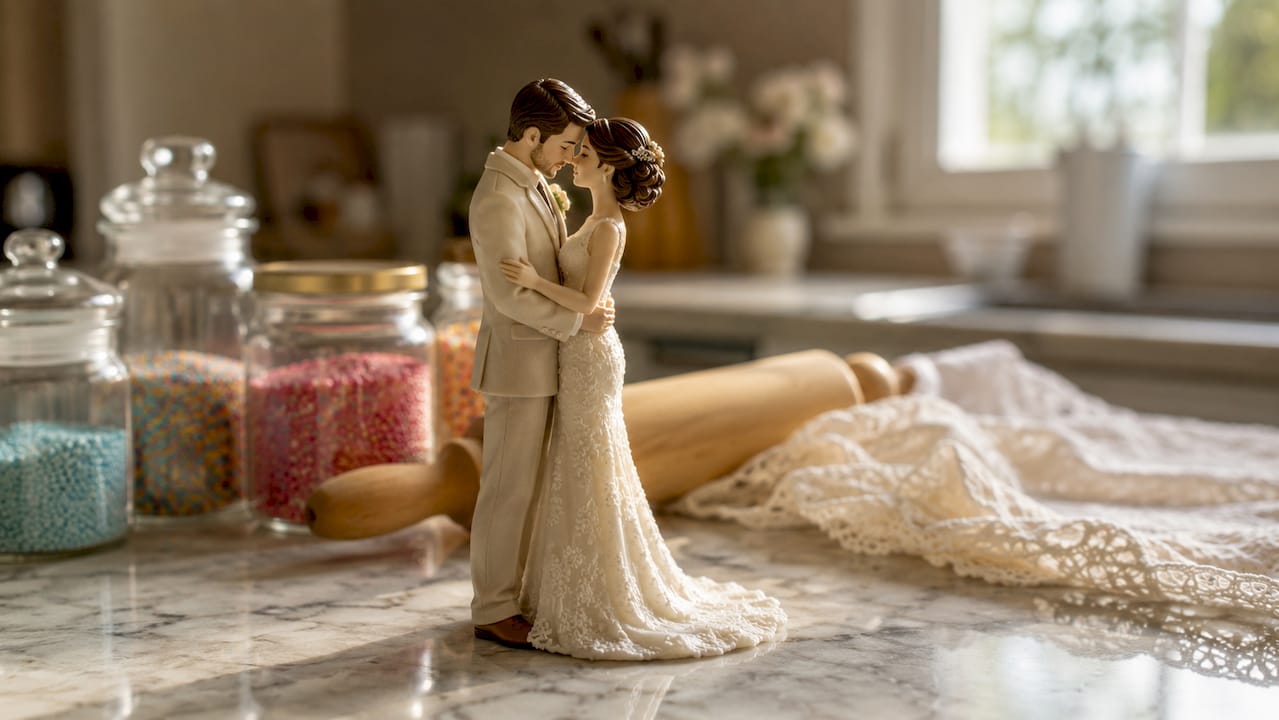
Minimalist designs with clean silhouettes and stable bases are preferred by digital sculptors for their timeless compatibility with nearly any wedding aesthetic. A simple two-figure silhouette in matte white PLA reads as elegant on a rustic barn cake and equally well on a sleek modern tiered cake. This style also prints faster and with fewer support structures, which reduces both cost and post-processing time.
The practical advantage of minimalism goes beyond aesthetics. Fewer overhangs mean fewer potential print failures, which matters when you are working against a wedding deadline. Couples who want personalization without the complexity of a fully detailed figurine find that a monogram base or a custom name plate beneath a clean silhouette delivers the same emotional impact at a fraction of the modeling cost.
3. Creative 3D printed wedding centerpieces and décor
Wedding decor 3D printing produces items that serve double duty: they look beautiful on the table and remain useful after the event. The most popular examples include:
- Geometric vases printed in PLA or PETG that hold fresh or dried floral arrangements
- Custom table number holders with the couple’s monogram or a motif that matches the invitation suite
- Money gift holders shaped like hearts or infinity symbols that guests interact with during the reception
- Photo frame centerpieces designed to hold a couple photo and a small flower pod in one unified structure
Functional pieces like money holders and photo frames increase emotional and practical value well beyond the wedding day. A guest who takes home a table number holder as a favor gets a functional object, not just a memento. This is the key difference between generic wedding decor and pieces designed with post-event life in mind.
For budgeting, DIY printing on a home FDM printer keeps per-unit costs low but requires time and skill. Professional services like Cc3dlabs handle multi-color and multi-material runs that a home printer cannot replicate, which is worth the added cost for centerpieces that need to photograph well. You can also explore laser-cut wood alternatives to complement your 3D printed pieces for a mixed-material table design.
4. Personalized 3D printed wedding gifts and keepsakes
Custom 3D figurines sized between 5 and 15 centimeters are the most requested unique 3D printed wedding gifts, used as both ceremony decor and lasting keepsakes. Services like Art Mellow require couples to submit photos for artist review before printing begins, with the final piece including painting and assembly. The minimum print size for adequate facial and clothing detail is 15 centimeters.
Pricing for these pieces is driven primarily by digital sculpting labor, not physical size. The modeling effort is roughly equal whether the final print is 5 or 15 centimeters tall, which means you get better value by ordering at the larger size. Multi-color prints add another layer of realism. A figurine with skin tones, hair color, and fabric texture printed in separate materials reads as a portrait, not a toy.
- Post-processing steps like sanding, priming, and painting are what separate a display-quality keepsake from a raw print
- Multi-color photo frames that hold a couple photo and a small floral arrangement combine romantic design with everyday function
- Keepsake holders, ring dishes, and personalized jewelry boxes are lower-complexity prints that still carry strong sentimental value
Pro Tip: If you use an AI-generated model for a figurine, run it through mesh repair software like Meshmixer or PrusaSlicer’s built-in repair tool before sending it to print. AI-generated models often have hidden geometry issues that cause print failures mid-job.
5. Choosing the right printing method and materials
The choice between resin and FDM filament printing determines the final quality of your wedding items more than any other single decision. Here is a direct comparison:
| Feature | Resin printing | FDM filament printing |
|---|---|---|
| Surface detail | High. Best for figurines and toppers | Moderate. Visible layer lines at small scales |
| Cost per print | Higher material and equipment cost | Lower. Under $5 in filament for most items |
| Print time | 2 to 4 hours for small figurines | 2 to 6 hours depending on infill and size |
| Best use case | Cake toppers, figurines, keepsakes | Vases, frames, table numbers, favor boxes |
| Post-processing | Requires UV curing and washing | Sanding and priming for smooth finish |
Resin printing is recommended for any item between 10 and 20 centimeters tall where surface quality matters. FDM printing in PLA or PETG is the right call for larger decorative items where layer lines are not visible at normal viewing distance. For outdoor wedding decor, material selection becomes critical. PETG and ASA outperform PLA in heat and humidity, which matters for summer ceremonies.
Pro Tip: Request a material sample from your printing service before committing to a full run of favors or centerpieces. Color, sheen, and rigidity vary significantly between PLA brands, and what looks good on screen may not match your wedding palette in person.
6. How to integrate 3D prints into your wedding planning
Timing is the most underestimated factor when ordering personalized wedding 3D prints. Custom figurines that require photo-based digital sculpting need at least four to six weeks from order to delivery. Simpler items like favor boxes or table numbers can be turned around in one to two weeks, but you still need time for review and reprints.
Practical steps for a smooth workflow:
- Start with a priority list. Identify which items are display-critical (cake topper, centerpiece) versus functional (favor boxes, table numbers) and allocate budget accordingly
- Mix materials intentionally. 3D printed geometric vases pair well with traditional floral arrangements. The contrast between the precision of a printed object and the organic quality of fresh flowers is visually striking
- Use AI tools for early concepts. Platforms like Sloyd AI let you generate a rough model quickly so you can evaluate proportions and style before paying for professional sculpting
- Plan for care and preservation. PLA prints are sensitive to heat above 60 degrees Celsius. Store keepsakes away from direct sunlight and avoid leaving them in a hot car after the reception
- Work with a service that offers design support. The 3D modeling process for custom wedding items involves file preparation, support structure planning, and material selection. A professional service handles all of this so you focus on the design, not the technical workflow
Combining traditional wedding elements with 3D printed accents creates a layered aesthetic that feels personal without looking like a tech showcase. A hand-calligraphed seating chart next to 3D printed place card holders, for example, blends craft traditions with modern production in a way that photographs beautifully.
Key takeaways
Custom wedding 3D prints deliver the most value when you match the printing method to the item type, order early, and prioritize digital sculpting quality over raw material cost.
| Point | Details |
|---|---|
| Resin for detail, FDM for scale | Use resin printing for figurines and toppers; use FDM for vases, frames, and favor boxes. |
| Sculpting labor drives cost | For custom figurines, the modeling effort is the main expense regardless of print size. |
| Order six weeks out | Photo-based custom figurines require four to six weeks from submission to delivery. |
| Functional prints last longer | Items like money holders and photo frames retain value and use well beyond the wedding day. |
| Repair AI models before printing | AI-generated STL files often need mesh repair to avoid mid-print failures. |
Why 3D printing is changing what weddings look like
I have seen a clear shift over the past few years in how couples approach wedding personalization. The request used to be “can you make something that looks like us?” Now it is “can you make something that is us, functions at the reception, and still looks good on our shelf in ten years?” That is a fundamentally different design brief, and 3D printing is the only production method that can answer all three parts of it at a reasonable cost.
What surprises most couples is how much the design phase matters relative to the print itself. A well-sculpted model printed on a mid-range FDM machine will outperform a poorly designed model printed on a professional resin system every time. The technology is a tool. The design is the product. I always tell couples to spend more of their budget on a skilled modeler and less on chasing the most expensive printing method.
The trend I find most interesting right now is the move toward functional keepsakes. A cake topper that becomes a desk ornament, a centerpiece vase that holds flowers for years after the wedding, a ring dish printed with the wedding date. These objects carry the memory of the day in a way that a photograph cannot, because you interact with them. That is where 3D printing genuinely outperforms every other personalization method available to couples today.
— Justin
Bring your wedding vision to life with Cc3dlabs
Cc3dlabs specializes in custom filament-based 3D printing and CAD modeling near Philadelphia, with the capability to handle everything from single cake toppers to full sets of wedding centerpieces and favors.
Whether you need a photo-based figurine sculpted from scratch, a multi-color photo frame, or a batch of personalized favor boxes, Cc3dlabs offers design support, material selection guidance, and fast turnaround for both local pickup and shipping. You can browse completed wedding and gift projects in the project gallery or go directly to the 3D printing services page to request a free estimate. For couples who want to explore the full range of what is possible, the personalized gift examples page is a strong starting point.
FAQ
What are the most popular examples of custom wedding 3D prints?
The most popular examples are romantic couple cake toppers, geometric centerpiece vases, personalized photo frames, money gift holders, and custom table number stands. Each category can be tailored to a couple’s specific style, color palette, and wedding theme.
How much do custom 3D printed wedding items cost?
Filament material for a single item costs under $5, but the total price depends heavily on whether a custom model needs to be digitally sculpted. Photo-based figurines from professional services cost significantly more because digital sculpting labor is the primary cost driver, not the physical print.
Is resin or FDM printing better for wedding cake toppers?
Resin printing is the better choice for cake toppers and figurines between 10 and 20 centimeters tall because it captures fine surface detail that FDM filament printing cannot reproduce at that scale. FDM is more cost-effective for larger decorative items where surface texture is less critical.
How far in advance should I order custom 3D printed wedding items?
Order photo-based custom figurines at least four to six weeks before the wedding to allow time for sculpting, review, printing, and finishing. Simpler items like favor boxes or table number holders can be completed in one to two weeks.
Can I use AI tools to design my own wedding 3D prints?
Yes. Tools like Sloyd AI generate printable STL files from photos in seconds without any design skills required. AI-generated models often need mesh repair before printing, so run the file through software like Meshmixer or PrusaSlicer before sending it to a printer.